When I first came across the video breaking down the SEC complaint against Tai Lopez, I honestly wasn’t expecting much. I’ve seen countless social media gurus, flashy online courses, and investment “opportunities” pitched as the next big thing. Usually, it’s just noise — hype, marketing, and a lot of promise with very little substance.
But something about this video made me pause. By the time I watched it a second time, I couldn’t shake the feeling of déjà vu. The claims laid out against Lopez — delayed disclosure of financial losses, commingling funds, using new investor money to pay older investors, and lavish personal spending — rang alarm bells that sounded eerily familiar.
And then it hit me. The patterns described in the video mirrored almost exactly what happened with Bobby and the Cliqly/Clickerr situation. It wasn’t the individual personalities that mattered; it was the systematic pattern of deception, the way investors and members were manipulated, and how the leadership prioritized their own gain over transparency and accountability.
This post is my attempt to break down that comparison. I want to show, side by side, how the SEC’s allegations against Lopez line up with what I personally experienced with Cliqly and observed with Clickerr. My goal is educational: to help you spot warning signs, understand how Ponzi-like schemes operate, and learn from my firsthand experience so you don’t fall into similar traps.
It’s also personal. I lived through the stress, uncertainty, and frustration of being a Cliqly member. I want this post to be more than just a dry comparison — I want it to convey the lessons I learned, mistakes I now see clearly in hindsight, and insights that can help other entrepreneurs and investors make better decisions.
By the end of this article, you’ll see the patterns for yourself — the missed payouts, the misleading presentations, the commingling of funds — and understand why recognizing these warning signs early can save you a lot of trouble.
My Personal Connection — Living Through Cliqly
Being a member of Cliqly wasn’t just about logging in, learning, or networking — it was a real emotional rollercoaster. At first, the promises sounded exciting. Bobby painted a picture of entrepreneurship and financial success that felt achievable. I remember thinking, “This could really change my life if I just follow the system.”
But soon, the red flags started piling up. Payouts were delayed. Updates were vague. Every time I asked for clarity about the company’s financials, the answers were evasive or simply nonexistent. In my notes, I wrote: “They say everything is cash flow strong, but something doesn’t feel right. Why can’t we see the numbers?”
The deeper I got, the more I saw patterns that now, in hindsight, are unmistakable:
Delayed or hidden financial disclosures: Just like in the Lopez case, where the SEC complaint highlighted that investors weren’t told the brands were losing millions for over a year, Cliqly members were kept in the dark about our actual financial situation. I remember thinking, “They’re telling us the ship is sailing smoothly, but my gut says we’re already in stormy waters.”
Commingling of funds to cover shortfalls: When Lopez allegedly moved money between brands to pay investors, it was identical to what I observed with Cliqly. Funds meant for one purpose were quietly redirected to patch holes elsewhere. My journal entry said: “It feels like they’re just shuffling money around to keep people happy, not actually fixing the business.”
Raising new funds to cover old promises: In the Lopez situation, new investors were tapped to pay older ones — the classic Ponzi setup. Cliqly followed the same blueprint. As I once told a friend, “It’s like they’re trying to keep the illusion alive at any cost — raising new money to make the old numbers look good.”
Lavish personal spending amid financial losses: Lopez allegedly took millions for personal luxuries while investors were in the dark. Similarly, Bobby flaunted success — flashy cars, trips, and events — while members were left uncertain about payouts. I remember thinking, “How can someone throw these parties when our accounts aren’t even adding up?”
The combination of these factors made it impossible to ignore the reality: Cliqly was a textbook case of a Ponzi-like pattern, even if it wasn’t officially labeled as such at the time.
By sharing my personal experience here, I hope to illustrate something critical: it’s not just about following the hype or trusting the “guru” figure. It’s about recognizing behavioral patterns, financial red flags, and systemic issues that can appear in any organization. My journey through Cliqly wasn’t just a loss of money — it was a crash course in learning to read the warning signs before it’s too late.
If I had known then what I know now, I would have immediately questioned the missing financials and the constant push to buy more programs. As I reflected later, “The patterns aren’t coincidences — they’re a playbook. Once you see them, you can’t unsee them.”
The One-to-One Comparison — The Identical Blueprint: Lopez & Mehr vs. Jones & Beeson from Cliqly” or “Side-by-Side: The Ponzi-Like Playbook
This is where the story gets really revealing. Watching the video about Tai Lopez, I kept pausing and thinking, “Wait, this is exactly what happened with Cliqly.” It wasn’t just a vague similarity — the accusations, patterns, and sequences lined up eerily well. To make it clear, I want to break it down side by side so you can see exactly how a Ponzi-like scheme operates in real life.
Pattern / Behavior
Tai Lopez (as per SEC complaint)
Bobby Jones (Cliqly Bankruptcy)
My Reflection / Experience
Delayed financial disclosure
Investors were not told for months/years that brands were losing millions; only disclosed once money was raised and failure was imminent.
Members were not shown accurate financials; vague statements claimed “cash flow strong” while losses were mounting.
“Every time I asked Bobby for the numbers, he dodged or said everything was fine. It felt like déjà vu when I watched the Lopez breakdown.”
Commingling of funds
Money was transferred between portfolio companies to cover obligations to investors of other brands.
Cliqly funds were shuffled internally to cover payouts to some members while leaving others unpaid.
“I remember seeing payments come through here and there, but it didn’t make sense where the money was coming from. They were juggling accounts to keep the illusion alive.”
Raising new funds to pay old investors
Lopez allegedly used new investor money to pay returns to earlier investors.
Bobby continually pushed new programs, subscriptions, and investment rounds to pay older members.
“It finally clicked for me: this isn’t growth. It’s a loop — money in from new members to keep old promises.”
False claims of profitability or success
Promised high returns (12–25% annually), presented the portfolio companies as highly profitable, and misrepresented personal gains.
Bobby repeatedly boasted about success, claimed programs would yield massive returns, and highlighted personal wealth to impress members.
“I remember the flashy stories, the parties, the cars — all while the financial statements told a different story.”
Investor/Members deception
Held conferences and sent emails painting a positive picture despite losses.
Hosted webinars, town halls, and emails claiming the company was thriving while payouts were late or missed.
“I kept comparing what was said in the Zoom calls versus what I was seeing — it never matched up.”
Personal enrichment amid losses
Lopez and associates allegedly took $16 million for themselves while businesses struggled.
Bobby took a percentage of member funds to fund lifestyle or other ventures, leaving members at financial risk.
“Seeing him flaunt success while some of us were scrambling for refunds or clarity made the pattern painfully clear.”
Eventual collapse / bankruptcy
Brands eventually failed, leaving investors with losses.
Cliqly eventually folded leaving members with huge financial losses, Clickerr showed signs of similar financial mismanagement.
“The slow unraveling over months, then years, finally validated every gut feeling I had along the way.”
Key Takeaways From the Comparison
Watching Lopez’s situation unfold helped me see something I couldn’t fully articulate during my Cliqly experience: there’s a predictable blueprint for Ponzi-like schemes. The same behavioral patterns repeat:
Over-promising, under-delivering — high returns, flashy stories, or misleading metrics.
Control of information — hiding losses until it’s “safe” to reveal them.
Circular funding — using new money to prop up earlier commitments.
Lifestyle signaling — flaunting wealth to maintain credibility.
Inevitable collapse — eventually the scheme unravels when cash flow runs out.
Watching Lopez’s alleged actions laid this blueprint out clearly. For me, the lesson was not just about recognizing fraud in hindsight — it was about understanding the warning signs so I could educate myself and others. As I wrote in my journal back then: “Once you see the pattern, you can’t ignore it. And you can’t unknow it.”
By laying this out side by side, it becomes clear that while the personalities and businesses differ, the structural playbook is almost identical. That’s why I wanted to share this comparison — it’s not about Lopez or Bobby individually, but about the behaviors and patterns that can jeopardize anyone involved.
Lessons Learned & Educational Insights
This is the part where I step back from the story and try to make sense of it, both as a participant and as someone who wants to educate others. Watching the Lopez breakdown and comparing it to what I experienced with Bobby and Cliqly, I realized that there are very specific lessons here — lessons that anyone involved in investments, memberships, or online programs should know.
Trust, But Verify — Always Look at the Numbers
One of the first red flags in both cases was the misrepresentation of financials. Lopez allegedly claimed companies were profitable when they weren’t. Bobby Jones & David Beeson did the same with Cliqly.
My personal takeaway:
“I realized I could not take any verbal assurances at face value. I started asking for spreadsheets, statements, and proof. If it wasn’t documented, it wasn’t real.”
The educational point here is that no matter how charismatic the person is or how convincing their pitch seems, financial transparency is non-negotiable. Investors and members need hard data, not hype.
Patterns of Deception Are Predictable
Both Tai Lopez and Bobby Jones followed a recognizable sequence:
Over-promising returns or benefits
Hiding or misrepresenting losses
Raising new funds to cover old obligations
Displaying wealth to maintain credibility
By seeing Lopez’s pattern unfold on video, I could reflect on Cliqly and Clickerr more clearly.
Lesson:
“Once you recognize the sequence, it becomes much harder to ignore warning signs in real time. That’s your best defense against getting caught up in a similar scheme.”
Personal Enrichment vs. Member/Investor Protection
In both scenarios, significant personal enrichment occurred while the companies were cash-flow negative. Tai Lopez allegedly took $16 million; Bobby Jones and David Beeson also took funds from member programs.
Reflection:
“Seeing this side by side made it personal. I remember feeling frustrated, angry, and helpless at Cliqly when money was clearly being used for lifestyles instead of commitments. It’s a stark reminder that promises to members or investors can be secondary when personal gain is the primary motive.”
The educational angle is clear: if personal enrichment occurs before fulfilling obligations, it’s a massive red flag.
Communication Is Key — or a Huge Warning Sign
Both Tai Lopez/Alex Mehr and Bobby Jones hosted calls, webinars, and emails portraying success while actual performance lagged. They controlled the narrative to prevent panic.
Lesson learned:
“I started documenting every call, every email, and every claim. The truth often hides between what is said publicly and what is shared privately — and that documentation can save you or at least clarify your position if things go wrong.”
Ponzi-Like Schemes Follow a Blueprint
By examining Lopez’s alleged missteps, I could see the “playbook” in action: fund juggling, delayed disclosure, flashy marketing, and new investor recruitment to cover old obligations.
Personal insight:
“It blew my mind to see the exact same structural blueprint repeated in a completely different context with Cliqly. Once you understand the playbook, you can recognize the signs early, protect yourself, and even educate others before it spirals out of control.”
The Importance of Learning From Experience
Finally, the biggest educational insight for me wasn’t just recognizing fraud — it was learning how to engage critically in any opportunity. Watching Lopez’s case reminded me of my own journey with Cliqly: how I learned to ask the right questions, notice discrepancies, and think independently.
“This isn’t just about being angry or cautious — it’s about building judgment and discernment. My experience with Bobby taught me that skepticism is a strength, not a weakness.”
Summary of Educational Insights
Always verify numbers and claims.
Recognize the warning patterns of Ponzi-like schemes.
Watch for personal enrichment at the expense of others.
Document communications carefully.
Understand the blueprint — it repeats.
Treat experience as a learning opportunity to build judgment.
I’ve learned the hard way what happens when trust is misplaced—but I’ve also seen how powerful it is when trust is earned through honesty, mentorship, and genuine collaboration. After the fallout from Cliqly, I made a promise to myself: never again would I join anything blindly or let shiny promises outweigh transparency. That decision led me toward what I now call Helponomics—a simple yet profound idea that real growth happens when people help each other succeed.
If you’ve ever felt lost after a bad investment or disappointed by false promises, don’t give up on the idea of online income—just change how you approach it. Find mentors who teach through transparency, communities that encourage honesty, and systems that reward integrity over hype. That’s what Helponomics is all about.
When I first started digging into the Lopez case, I didn’t expect it to hit so close to home. But as I listened to the breakdown and watched the details unfold, I kept finding myself whispering, “That’s exactly what happened with Cliqly.”
It wasn’t just about fraud, or greed, or even bad management — it was about the pattern. The repeated behaviors. The same psychological manipulation of trust, loyalty, and hope. Both Tai Lopez/Alex Mehr and Bobby Jones/David Beeson built communities around ambition and belief — and both allegedly used those communities as funding mechanisms rather than true partnerships.
The scariest realization for me was how easy it was to get caught in it. I wasn’t naïve or uninformed; I simply trusted too much and questioned too little.
“The first time I noticed the cracks, I told myself, ‘It’s just a delay, these things happen.’ But by the third time, I realized: this isn’t a delay, this is a pattern.”
That’s when I understood something crucial — financial education isn’t optional anymore. It’s not enough to believe in a company’s mission or a founder’s charisma. You need to understand how money moves, what financial transparency looks like, and how to identify circular funding systems that mimic growth while actually masking debt.
What Justice and Accountability Should Look Like
In both cases, there are legal and moral implications. For Lopez, the SEC’s allegations lay out the blueprint of investor deception; for Bobby Jones and Cliqly, the bankruptcy process is forcing transparency after years of secrecy.
The educational takeaway for all of us is this:
Accountability doesn’t start with lawsuits. It starts with demanding honesty before the collapse.
Justice isn’t just about punishment. It’s about protecting future investors, members, and communities from falling into the same traps.
“Watching both situations unfold made me realize — you don’t have to be a victim twice. Once you’ve lived through a scheme, your voice becomes your shield.”
Moving Forward: My Next Step and Yours
For me, writing this comparison isn’t about revenge or blame. It’s about clarity. It’s about connecting the dots and giving others the map I wish I’d had.
My next step is to keep documenting what’s happening — both in the Lopez case and in Cliqly’s ongoing bankruptcy. I plan to publish updates, include resource links, and continue sharing my lessons learned.
If you’ve been affected — by Cliqly, Clickerr, or anything similar — here’s what I suggest:
Document everything. Keep emails, screenshots, transactions, and call notes. They may be vital later.
Stay informed. Follow official filings, trustee updates, and verified legal sources.
Educate yourself and others. The more people understand how Ponzi-like systems operate, the fewer will get caught in them.
Don’t blame yourself. These systems are designed to manipulate trust. What matters is what you do with the lesson.
Speak up. Sharing your story, even anonymously, can help expose ongoing misconduct and protect others.
Final Reflection
If there’s one quote that sums up my journey, it’s this:
“Experience is not what happens to you — it’s what you do with what happens to you.”
This comparison between Lopez and Bobby isn’t just about two men or two companies — it’s a mirror reflecting how easily ambition can be weaponized and how critical it is for us to stay financially literate and emotionally grounded.
Cliqly may have fallen apart, but what I’ve gained is the awareness to never ignore the warning signs again. That awareness — shared and multiplied — is how we make sure fewer people fall for the same playbook.
Additional Resources & References
If you want to dig deeper into what I covered — or just educate yourself so you don’t fall into similar situations — here’s a curated list of resources I found invaluable during my research. I’ve also included my notes about why each one mattered to me personally.
1. SEC Complaint Against Tai Lopez and Rev Companies
Why it matters: Reading the complaint helped me see the structure of a Ponzi-like scheme laid out in legal terms. The parallels to Cliqly — commingled funds, missed investor payments, and raising new money to cover old losses — were shockingly clear.
Personal takeaway: Seeing the timeline of misrepresented financials reminded me of the moments in Cliqly where I should have asked harder questions — instead of brushing off inconsistencies.
Why it matters: These filings give insight into how a company collapses when promises aren’t backed by real revenue. You can trace creditors, lost funds, and the exact breakdown of payouts — eerily similar to the patterns in Lopez’s case.
Personal takeaway: I was able to pinpoint where Bobby misled members and how quickly investor trust can be eroded. Seeing it in black and white was sobering.
Why it matters: This is a basic but crucial guide to spotting red flags: promises of high returns with low risk, lack of transparency, and dependence on new investor money.
Personal takeaway: I kept thinking, “If only I had read this before Cliqly…” — but now I use it to evaluate every new investment or mastermind opportunity.
4. YouTube Analysis of Lopez & Investment Patterns
Why it matters: The video that started this whole blog post was the spark. Hearing someone break down the timeline, the numbers, and the warning signs — in plain English — made me connect dots I hadn’t seen before.
Personal takeaway: I replayed this twice and took notes. It became my framework for analyzing Cliqly’s collapse in real time.
Why it matters: Knowing how to read balance sheets, cash flows, and income statements could have saved me from a lot of guesswork.
Personal takeaway: I’m now obsessed with understanding the real financial health of any business before committing — it’s not just about charisma or promises.
6. Community & Peer Learning
Resource: Facebook Groups, Forums, Discord groups, or small investor communities can help you share insights, flag suspicious activity, and validate suspicions before it’s too late.
Personal takeaway: When I looked back at Cliqly, I realized the red flags were out there — but I didn’t have a trusted group to interpret them. Now I do.
How to Use These Resources
Read critically — don’t take claims at face value, whether it’s a flashy ad or a founder’s personal story.
Compare timelines and numbers — look for consistency across communications, filings, and public records.
Document your findings — screenshots, notes, or journals help if you ever need evidence.
Share responsibly — discuss with peers or a mentor before spreading accusations, but don’t ignore suspicious patterns.
“The more I learned, the more I realized knowledge is the only real protection against being misled. And that’s exactly what I want this post to do: protect you while teaching the lessons I learned the hard way.”
Recommended Books & Readings: Learn to Spot Ponzi Patterns
Disclosure: Some of the book links below are affiliate links. This means that if you click on the link and make a purchase, I may earn a small commission at no extra cost to you. I only recommend resources that I personally found valuable in learning to recognize these patterns.
When I started comparing what happened with Bobby/Cliqly/Clickerr to the Lopez/Rev situation, I realized just how predictable Ponzi schemes can be if you know what to look for. These books helped me connect the dots and create my own “red flag” checklist.
I’ve included them here because they’re not just theory — they show real-life patterns that anyone investing in startups, online courses, or member-based programs should recognize. Plus, if you decide to grab a copy through Amazon, it helps support this blog.
Why it’s helpful: Breaks down Ponzi schemes in easy-to-understand steps.
How I used it: I compared the behaviors in this book to Bobby’s Cliqly and Clickerr operations — the overpromised returns, the use of new money to pay old investors, and the delayed disclosure of losses.
Tip: Make a note of the “red flags” and highlight examples from real cases as you read.
Why it’s helpful: Tells the original Ponzi story and explains why it fooled so many.
How I used it: I realized the same psychological triggers are used today — flashy lifestyles, overhyped success, and persuasive storytelling. Lopez/Rev and Bobby/Cliqly were textbook examples.
Tip: Compare the storytelling tactics in the book to the social media hype you see around modern ventures.
Why it’s helpful: Shows common ways companies manipulate financial statements.
How I used it: I re-read financial updates and investor emails from both Lopez/Rev and Cliqly, spotting inconsistencies and misleading claims about profits.
Tip: Take notes as you read — you’ll start to see patterns in cash flow, misrepresented earnings, and fund commingling.
Why it’s helpful: Explains how hype and perception can mask financial disaster.
How I used it: It made me realize how easily investors are swayed by appearances — the “success” of a business can be fabricated for months or years before collapse.
Tip: Apply this lens to online ventures — flashy parties, luxury cars, and social proof often signal more than just confidence.
Why it’s helpful: Teaches aligning investments with personal values and risk tolerance.
How I used it: I reflected on how my own money was involved with Cliqly and Clickerr. The book helped me understand why I felt uneasy early on, and how to act on gut instincts.
Tip: Use it to create a personal “investor checklist” — never ignore red flags, no matter how convincing the hype.
How to Get the Most Out of These Books
Create a Red Flag Tracker: While reading, note anything suspicious and compare it to what you’ve seen in Bobby/Cliqly/Clickerr and Lopez/Rev.
Apply in Real-Time: Next time you consider an investment, test it against the lessons from these books. Ask yourself:
Are promised returns realistic?
Is the money flow transparent?
Are losses being hidden or delayed?
Does the operator live a lifestyle funded by investor money?
Keep Notes: I made a spreadsheet comparing each red flag from the books to real cases — it made patterns incredibly clear.
Personal Note: Reading these books while reviewing investor updates from Cliqly and Rev was eye-opening. I could see the same mistakes and manipulations repeated over and over. It made me more confident in spotting risky ventures and protecting my community.
Conclusion: Lessons Learned & Reflections
Looking back at both the Tai Lopez/Rev case and my personal experience with Bobby, Cliqly, and Clickerr, the similarities are impossible to ignore. From misrepresented financials to commingling funds, missed investor payouts, and raising new money to cover old obligations, the patterns of a Ponzi-like scheme are clear in both instances.
For me, writing this post wasn’t just about pointing fingers — it was about processing my own experience, learning from it, and sharing those lessons so others can avoid the same pitfalls. I had been blindsided at Cliqly, trusting promises and flashy presentations over actual financial reality. Seeing the Lopez case unfold made me realize: these red flags aren’t coincidences; they follow predictable behaviors that, once recognized, can protect you from significant financial harm.
Here’s what I want you to take away:
Transparency is everything — if a company isn’t sharing verifiable financials, that’s a huge warning sign.
Track the money — understanding how funds flow (and whether they’re being used as promised) is crucial.
Ask hard questions early — skepticism is a strength, not a weakness.
Learn from experience — it’s not about shame, it’s about understanding patterns so you can act differently in the future.
Personally, this process reminded me that my role as a member, investor, or entrepreneur is not just to trust but to verify. The shock of seeing history repeat — whether it’s Cliqly or Clickerr — is painful, but it’s also a powerful teacher. My hope is that by laying out the timeline, the parallels, and my own lessons learned, readers can recognize Ponzi-like behavior earlier, ask the right questions, and protect themselves and their communities.
“What I’ve learned is that money, trust, and transparency are inseparable. Once one cracks, the others follow — and understanding that early can save you from making the same mistakes I did.”
In short, education is protection. Awareness is power. And the more we examine these cases side by side, the clearer it becomes: there are patterns to watch for, lessons to apply, and hard-earned wisdom to share.
Q&A: Understanding Ponzi Patterns and Protecting Yourself
Q1: What is a Ponzi scheme, and how does it relate to what happened with Cliqly/Clickerr and Lopez/Rev? A: A Ponzi scheme is a financial operation where returns to earlier investors are paid using funds from newer investors, rather than actual profits. In both cases, money raised from new members or investors was used to cover obligations to earlier investors. With Cliqly and Clickerr, this meant some members received payouts while others didn’t, masking the company’s real financial health. Similarly, in the Lopez case, Rev raised funds for multiple brands and funneled money between them to keep investors happy, even when the underlying businesses were losing millions.
Q2: Were there warning signs that I missed with Cliqly? A: Yes. In hindsight, some clear red flags were present: promises of unusually high returns, lack of transparent financial reporting, reliance on flashy presentations to attract investors, and repeated excuses for missed payments. Experiencing it firsthand taught me that skepticism is essential — and that flashy marketing should never replace verified numbers.
Q3: How did the Lopez case help me make sense of my own experience? A: Watching the Lopez complaint unfold was like looking in a mirror. Every tactic — overpromising, misrepresenting profits, delaying disclosure, using new investor funds to cover old obligations — mirrored what I lived through with Bobby. It validated that these patterns are predictable and that awareness is the most effective protection.
Q4: What role does transparency play in investments or membership programs? A: Transparency is non-negotiable. Both cases show how dangerous it is when leaders withhold critical financial information. Members and investors must have access to accurate, timely, and verifiable data to make informed decisions. The lack of transparency is the defining feature that transforms a struggling business into a potential Ponzi scheme.
Q5: What personal lessons can others learn from my experience? A: Several key lessons:
Always verify claims independently.
Look beyond marketing and flashy presentations.
Track where funds are going. Commingling or unusual fund transfers are major warning signs.
Ask hard questions and trust your instincts — early skepticism is protective, not pessimistic.
Learn from the patterns of others. Seeing Lopez’s case made me recognize behaviors I had ignored with Cliqly.
Q6: How can readers protect themselves moving forward? A: Educate yourself on red flags, insist on financial transparency, diversify your investments, and never rely solely on charisma or promises. Understanding the mechanics of Ponzi schemes can help you identify risky situations before committing funds. My advice is simple: knowledge + vigilance = protection.
Q7: Why share this story publicly? A: Because learning from real-world experiences — both your own and others’ — is invaluable. By comparing these two cases side by side, I hope readers can see the patterns, avoid making the same mistakes, and develop a stronger sense of financial literacy. Sharing my journey makes the lessons more personal, relatable, and actionable.
Where to Go from Here if You’ve Been Entangled in One or Both of These Ponzi Schemes
First, take a deep breath. Realizing you’ve been involved in a Ponzi-like scheme can be overwhelming, but there are concrete actions you can take to protect yourself and move forward. Based on my own experience with Cliqly and Clickerr, here’s a roadmap:
1. Gather Documentation
Collect everything: contracts, emails, payment records, investor statements, Zoom calls, and any correspondence with the company. These documents are crucial if you decide to pursue legal action, file a complaint, or simply want a clear record of what happened.
2. Track Your Losses
Make a clear record of the money you invested and any returns (or missed payments) you received. This will help you understand the full scope of your exposure and is essential for any potential recovery process.
3. Report the Incident
For U.S. investors: File a complaint with the SEC (for investment fraud) or the FTC (for consumer-related scams).
For non-U.S. investors: Contact your local financial regulatory authority. Even if recovery isn’t guaranteed, reporting helps authorities build cases and potentially stop the perpetrators from targeting others.
4. Seek Legal Advice
Consult an attorney experienced in investment fraud. Some may work on a contingency basis, meaning you don’t pay unless you recover funds. A professional can advise whether joining a class-action lawsuit, civil suit, or regulatory action is appropriate.
5. Connect With Other Victims
Sharing your experience with other investors or members can provide both emotional support and practical information. Patterns often emerge when multiple accounts are compared, and this can strengthen legal or regulatory cases.
6. Educate Yourself for the Future
Use this experience as a lesson:
Always verify financial claims independently.
Watch for signs like promised high returns, lack of transparency, and fund commingling.
Be wary of pressure to invest quickly or marketing that emphasizes lifestyle over financial results.
7. Protect Your Emotional and Financial Health
Being involved in a Ponzi scheme can take a heavy emotional toll. Consider talking to a financial counselor or mental health professional to navigate feelings of betrayal, anger, or anxiety.
8. Stay Informed
Keep track of legal updates related to the cases. In both Cliqly/Clickerr and Lopez/Rev, regulatory filings and court documents may provide opportunities for recovery or at least offer clarity on what went wrong.
“The key is not to dwell on the loss but to learn, document, and take proactive steps. Knowledge is your best defense against ever being in this situation again.”
If you need any help preparing your declaration form, please contact me ASAP via DM so I can help you out. You need to send out your declaration via email quickly because this is your only chance to get back what you are owed.
Rebuilding the Right Way — Through Helponomics and Honest Mentorship
If you’ve made it this far, you already know that what happened with Cliqly wasn’t just bad luck — it was a wake-up call for all of us. It taught me that not every opportunity online is what it claims to be. But it also showed me something much deeper: that integrity and community matter far more than hype and empty promises.
After losing thousands of dollars and countless hours to a platform that turned out to be built on deception, I had to take a long, hard look at how I approached online business. I asked myself: How can I still build something real — something that lasts — without falling for the same traps again?
That question led me to the concept I now live by: Helponomics — the economics of helping. It’s about building success through transparency, mentorship, and a genuine desire to lift others up, not exploit them. The philosophy is simple: when we all help each other grow, everyone wins.
I decided that my next chapter would look completely different from my past experiences. I sought out mentors who walk the talk — people who prioritize teaching over selling, and who believe that honesty isn’t just good ethics, it’s good business. Together, we’ve been building from a foundation of trust, education, and long-term sustainability.
This time, I’m doing things with guidance — not blind faith. I’m focusing on learning real marketing skills, creating value, and understanding the systems I use instead of handing over control to someone else. Every decision I make now goes through one filter: “Is this transparent, honest, and helpful to others?”
And you know what? The difference is night and day. No more chasing “secret systems” or “instant wealth.” No more waiting on payouts that never come. No more trusting people who hide behind smooth talk and screenshots.
If you’re recovering from a scam or just tired of the online chaos, I want you to take one thing away from my journey: You can rebuild — the right way.
This is the heart of Helponomics — helping one another rise while keeping honesty and humanity at the center of business.
It’s not about blind trust anymore. It’s about informed trust. It’s about rewriting the story — one ethical, sustainable success at a time.
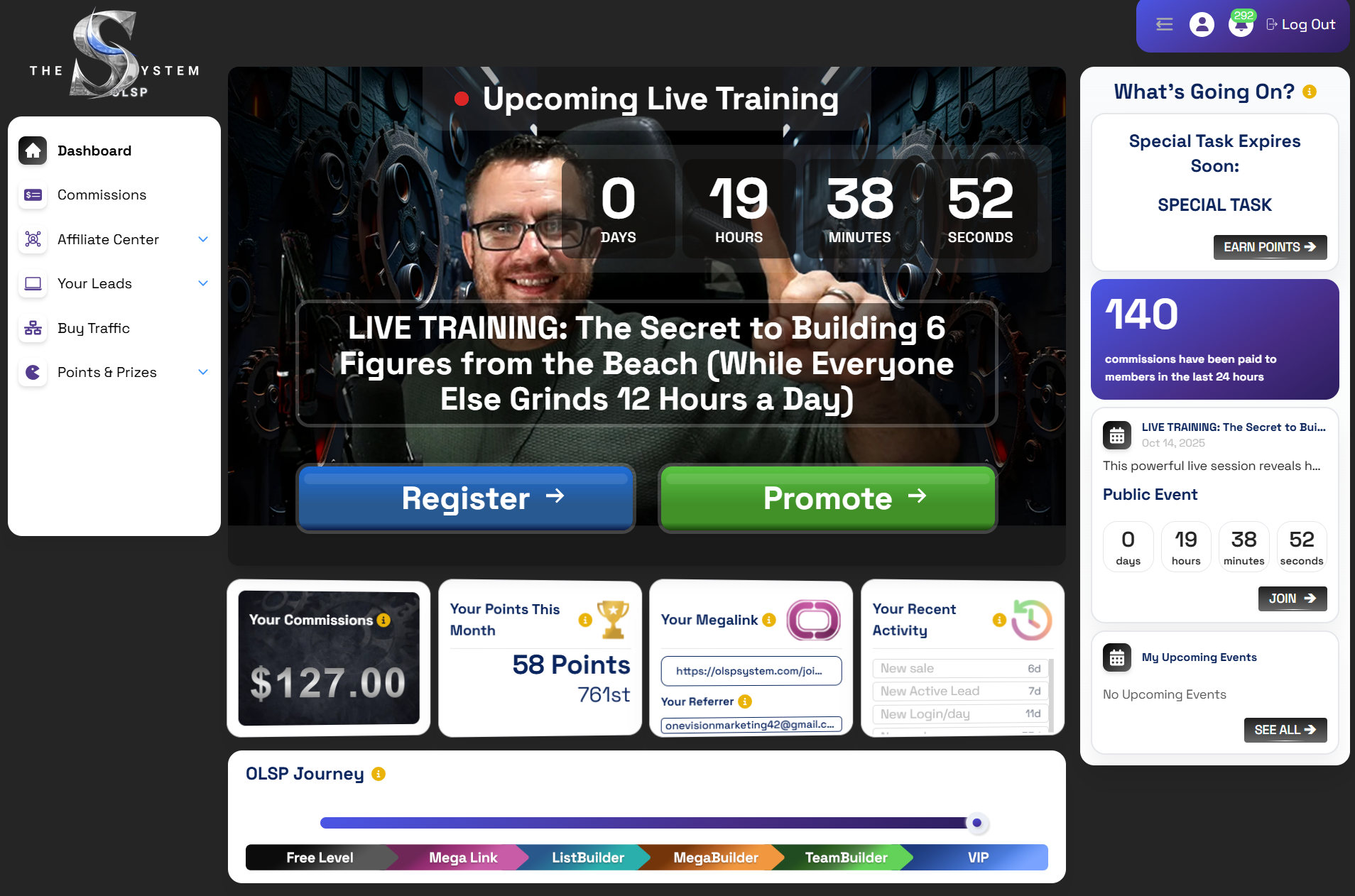
Here is a screenshot from my member area where I recently made $127. The funny thing is I just followed the Toffee Method (taught inside the member area by my mentor), but my mentor is following up with my leads I brought in from the Toffee method.
He sends emails on my behalf, he nurtures them, and converts these leads into sales for me and even gives me lifetime commissions for every lead that comes from me and that he converts for me. I do not even have a clue how I made these $127 because as I am writing this I enjoy a late summer vacation.
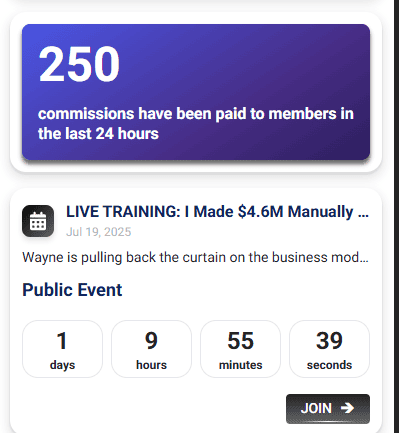
I just logged into my account to make this screenshot and the $127 popped up! How amazing is this?! As you can see 140 commissions have been paid out in the last 24 hours to members.
I highly recommend this program because when I got started with this right after I understood that Cliqly turned into a scam, I followed the 24 hour challenge and made my first commissions within 24 hours!
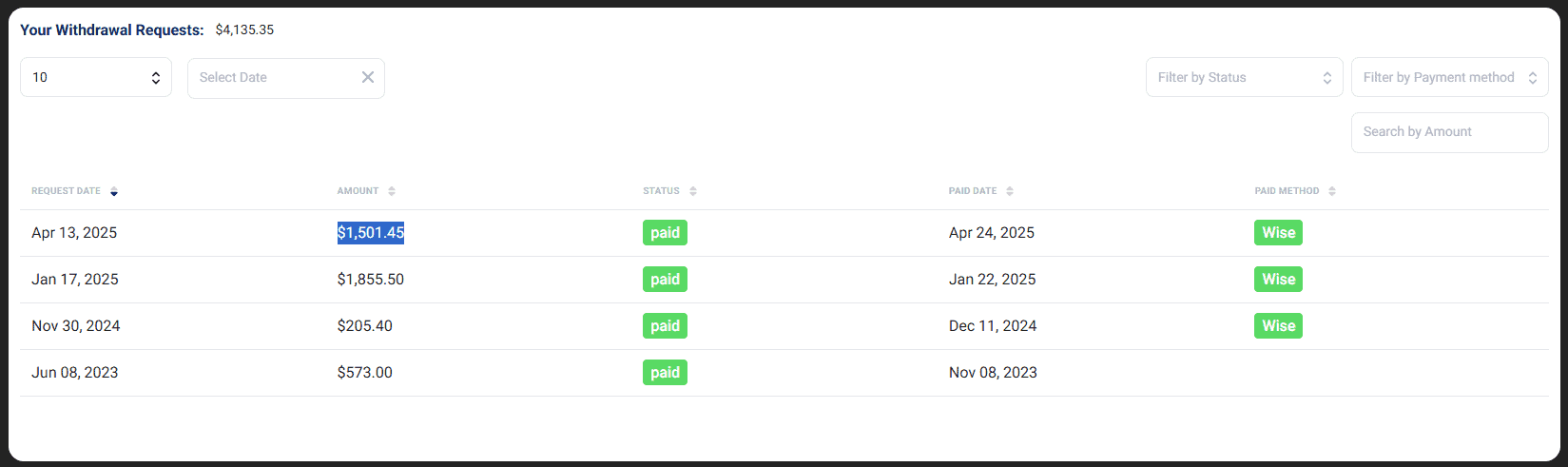
Since I started I have been receiving my commissions like clockwork inside my Wise and Paypal account without a single issue. The threshold is only $50.
Support is on standby and your technical questions will be taken care of asap via the most robust help support system.
If you have a training question, you can get your questions answered via the Skool group by Wayne himself or by other students based on the principle of Helponomics. If you are on a higher level you get access to other training platforms with daily live training and coaching.
You can start the whole business for $7 and as you progress with your commissions you can go from free up to VIP where I am right now. You will be trained every day on every level, you will feel the spirit of Helponomics, and if you follow through you will get your first wins very quickly.
Final Thoughts: Your Turn to Take the Next Step
If my story resonates with you, let it serve as a reminder that your setback doesn’t define you — your response does. We’ve all made choices based on trust, but now it’s time to build on wisdom. Whether you’re just beginning again or still finding your footing, remember: you don’t have to do it alone. Surround yourself with honest mentors, focus on learning before earning, and keep transparency at the heart of everything you build.
Drop a comment below and share what part of this journey spoke to you most — or how you’re planning to rebuild with honesty and purpose. Let’s start a real conversation about how ethical, transparent, and community-driven business can become the new standard online.
Together, through Helponomics, we can prove that doing good and doing well aren’t opposites — they’re the same path.
My Experience with the Yepbit / Fidelity Capital Investment Group (FCIG) Crypto Scam – What Really Happened and How to Protect Yourself
I never imagined that I would one day write about falling victim to a crypto scam. I considered myself careful, skeptical, and not easily fooled. Yet, I found myself caught up in what appeared to be a legitimate investment opportunity — one that felt safe, professional, and even generous at first. What I eventually discovered was a complex, well-orchestrated scam that combined emotional manipulation, technical deceit, and social pressure in a way that could trick almost anyone.
This story involves two main players: a supposed crypto exchange called Yepbit and a Telegram group known as Fidelity Capital Investment Group (FCIG) led by a man who called himself Professor Brook. At first glance, everything looked credible — the trading platform seemed functional, profits appeared consistent, and the “professor” came across as experienced and caring. But beneath the surface, nothing was real.
I’m sharing my experience in detail because I know how convincing these operations can be. If this story can help even one person avoid losing their savings or exposing their identity, it will have been worth writing. This isn’t just a warning — it’s also an explanation of how this kind of scam works, why it feels real for so long, and what to do if you’ve been caught in something similar.
Finally, I decided to release this article not only to shed light on warn readers about this specific yepbit/fcig/professor brook/sofia scam, but as a mini-course on how sophisticated pig butchering and social engineering scams operate in the crypto world.
How It All Began: What is Yepbit Trading & What is the Fidelity Capital Investment Group (FCIG)
It started innocently enough. I was invited to join a Telegram group that presented itself as an educational community for cryptocurrency investors. The group was called Fidelity Capital Investment Group, and the main figure there was “Professor Brook.” and the best team builder of the group to whom Professor Brook proudly referred to as “Sofia”. His profile described him as a financial advisor with years of trading experience and a reputation for helping beginners succeed. The group appeared friendly and organized, filled with people who seemed genuinely engaged and grateful for his guidance.
Professor Brook offered what he called “daily strategy codes.” Twice a day, he would share a short sequence of numbers and letters that we were supposed to paste into the futures trading section of a platform named Yepbit. According to him, these codes were derived from complex trading algorithms and had a “99.9% win rate.” Every message was carefully worded, and there was an air of professionalism that made it easy to trust him.
Following his instructions was straightforward. I created an account on Yepbit, deposited a small amount of 300 USDT, and entered the codes as directed. Within minutes, my balance showed a small profit. The next day, the same thing happened. Every trade was a win — never a loss. Soon, the idea that I might have found a legitimate, low-risk trading opportunity started to feel entirely believable.
The Mentor Trap: How Professor Brook Controlled the Scam
One of the most striking parts of this scam was the human element — the persona of Professor Jonathan Brook and the structure of Fidelity Capital Investment Group (FCIG).
At first, Professor Brook appeared to be a genuine mentor. He offered daily trading codes, guidance, and encouragement. His messages were personal, acknowledging our progress and even referencing life events, like my summer holiday or my trip to Ischia. He created the impression that he cared about our success and that he was monitoring our trades to help us grow steadily.
FCIG, the Telegram group, reinforced this illusion. Members appeared enthusiastic, organized, and part of a larger worldwide network. The platform displayed “teams” from different countries, all supposedly working toward shared goals. The emphasis on recruiting and building local teams gave the impression of a legitimate network rather than a scam.
What made this particularly deceptive is that Professor Brook and FCIG were directly controlling the Yepbit exchange. In reality, a legitimate exchange should operate independently from any advisor or group. No external Telegram mentor should have the power to approve withdrawals, reset trading passwords, or influence account activity. Yet in this scam, Yepbit’s platform and FCIG were intertwined, making it appear that your success depended on following the professor’s instructions perfectly.
This is why the scam was so convincing. Everything — the profits, the small withdrawals, the social reinforcement, even the customer support — was coordinated between the Telegram group and the exchange. Victims were led to believe they were interacting with a legitimate exchange, while in fact, the “advisor” controlled both the platform and the social environment.
Sofia’s Team-Building Pressure Tactics
Another key element of this scam was Sofia, Professor Brook’s assistant, who played a central role in maintaining control over members and enforcing the recruitment system. Sofia was presented as the “number one team builder,” someone to admire and emulate. Members were constantly reminded that they should aspire to become like her — disciplined, efficient, and committed to building their teams. This created a social benchmark that combined admiration with subtle pressure, making it easier for the scammers to manipulate participants psychologically.
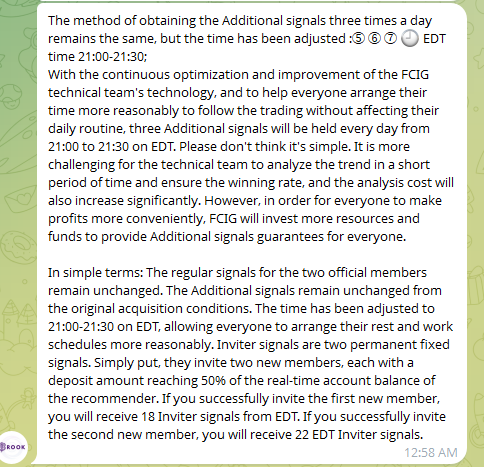
The team-building element was central to the scam. Victims were encouraged, sometimes daily, to recruit new members and expand their “teams” using affiliate links. Success was measured not just by personal trading profits, but by the number of people you could bring into the fold. Those who resisted or failed to comply faced consequences: access to daily signals was blocked, praise was withheld, and subtle insults were used to reinforce compliance.
My husband, for example, was blocked from daily signals after he refused to comply with this relentless recruitment pressure. A friend who had referred us to the group was also blocked for the same reason. Both of them found the constant “harassment” from Sofia and Professor Brook unacceptable. They did not respond to the pressure tactics and were immediately removed from the benefits of the scam, showing how tightly control was enforced over participants.
In our case, the social manipulation even extended to national stereotypes. My husband was labeled “lazy,” and the French team as a whole was described as the least effective, supposedly because of “French personality traits.” These comments were designed to provoke guilt, motivate action, and make victims feel personally responsible for failure, further encouraging participation in recruiting new members.
I personally prolonged the experiment because I challenged the professor, questioning his instructions and tactics. For a time, he allowed me to continue receiving daily signals, but eventually, I too was blocked. The condition for regaining access was to recruit at least 10 active members, demonstrating that the platform and its “profits” were entirely contingent on submission to the team-building system.
This combination of controlled access to profits, social pressure, admiration for key figures, and psychological manipulation shows how sophisticated the scam was. It wasn’t just about fake trading — it was also about exploiting human behavior, emotions, and social influence to maximize compliance and extract as much as possible from participants.
What a Typical Day in the Yepbit/FCIG Scam Looked Like
To help readers visualize how these scams operate, here’s what a typical day looked like in my experience:
1. Receive daily trading codes from Professor Brook in the Telegram group.
2. Enter the codes into the futures section on Yepbit.
3. Watch your balance grow by small amounts — usually 1% per trade, twice a day.
4. Receive personal messages from Professor Brook or Sofia praising progress or giving team-building instructions.
5. Be reminded to recruit new members and expand your “team” using an affiliate link.
6. Repeat verification steps or respond to messages from support if minor technical issues appear.
7. If you don’t comply with recruitment tasks, access to signals is blocked.
This repetitive cycle reinforces trust, dependence, and compliance. Small profits, daily attention, and social pressure all work together to maintain the illusion of legitimacy.
The Bait: Why Small, Fake Profits Felt Real
The first few weeks were the most convincing part of the experience. I watched my balance grow little by little each day. The profits weren’t enormous — usually about one or two percent daily — but they were steady, predictable, and completely in line with what the professor had promised. He often reminded us that patience was key and that consistency was how professionals built wealth. It sounded reasonable, and the results on my screen seemed to confirm it.
After a few weeks, I decided to test the system by withdrawing a small amount — 100 USDT. To my surprise, the withdrawal went through smoothly. The money arrived in my wallet within hours. That simple transaction erased any remaining doubt I had. I told myself that scammers wouldn’t allow withdrawals, and since the system worked, it must be genuine.
My husband also opened an account, investing 500 USDT, and his results mirrored mine. He managed to grow his balance to 1,300 USDT, while I reached around 1,800 USDT. We both felt that we had discovered a rare opportunity — a small but reliable income stream in a market full of risk.
What we didn’t realize was that this initial phase — the stage where everything feels effortless and trustworthy — is an intentional part of the scam. The small profits, the occasional successful withdrawal, and the personal attention from “Professor Brook” were all designed to create trust. The moment you believe it’s real, you let your guard down. And that’s when the manipulation truly begins.
The Interaction Between the Telegram Group (Fidelity Capital Investment Group aka Professor Brook & Sofia) and the Exchange
To clarify for readers, here’s what is unusual about this connection:
Legitimate exchanges are independent. They have their own customer support, withdrawal policies, and security measures. External advisors or Telegram groups cannot alter account balances or approve withdrawals.
In this scam, the professor had de facto control. When my withdrawal was blocked for “IP security reasons,” support instructed me to consult Professor Brook — a step that would never happen on a legitimate platform.
The Telegram group reinforced the illusion. Daily codes, team-building tasks, and personal messages all contributed to trust. Without this connection, the platform alone would appear suspicious — it’s the combination of social manipulation and fake trading data that made it seem real.
This dual-layer manipulation — fake exchange + controlled social environment — is a hallmark of sophisticated crypto scams.
Early Red Flags That I Ignored
Even while I was seeing consistent profits, a few things started to feel a little off. At first, they seemed minor or easy to dismiss, but looking back, they were early warning signs.
One of the first oddities was the constant emphasis on building a team. Professor Brook encouraged us to recruit others, explaining that each country had to form its own “FCIG team.” He joked about the French team being lazy and promised rewards if we could improve our country’s participation. At the time, it felt like harmless motivation, a kind of gamified approach to learning trading, but it was actually part of a psychological tactic to make us feel invested in the group beyond just our own account balances.
Another thing I noticed was the attention and time Professor Brook and his assistant “Sofia” gave. They messaged individually, checked on our progress, and praised us for following instructions. It felt personal, almost like mentorship, but it was really a method to build trust and dependence. The longer they kept us engaged, the more likely we were to follow their directions unquestioningly.
Lastly, there were minor inconsistencies and unusual behavior that I ignored because I was focused on the profits. Sometimes their explanations were vague or repeated the same line over and over. Occasionally, the support agents seemed confused or spoke in different languages. At the time, I brushed it off as cultural differences or technical difficulties. In hindsight, these were all early signs that the operation wasn’t as professional as it appeared.
When Things Started to Go Wrong
The first major problem came when my husband was suddenly blocked from trading. He had been following the professor’s signals exactly as instructed, and there was no apparent reason for the restriction. The explanation he was given was strange — something about not contributing enough to his team’s growth. It was a bizarre and unconvincing excuse, but we still held onto the belief that the platform was legitimate.
A few weeks later, similar issues started happening to me. Logging into my account became increasingly difficult. The system kept rejecting my trading password, and every attempt to resolve the problem required multiple identity verification steps. Customer support repeatedly asked for photos of me holding my passport, even though my account had already been fully verified. Each new request seemed more absurd than the last, and no one gave consistent explanations.
The interactions with professor Brook and the support from yepbit felt scripted. Their responses often didn’t answer my questions and sometimes changed languages unexpectedly. At one point, I realized that no matter how carefully I followed instructions, there was always another “problem” preventing me from accessing or using my account fully.
Here is the last message I received from Professor Brook via his Telegram channel on the 8th of October 2025 when I came back from my summer holiday and this happened right before I made my final withdrawal of 1,819.06 USDT that he suggested.
During october 2025 I was already banned from the FCIG Telegram channel and from receiving my two daily signals because I did not fulfill our “spiritual contract” as he called it. He pressured me every day into finding 5 to 10 active members for my team. Active meaning people who sign up to Yepbit and who deposit a minimum of 300 USDT.
I finally got banned for not following this weird spiritual contract because I did not bring in 5 formal active members.
I found his methods pretty annoying and weird plus my friend got banned for the same reason so I made this social experiment with Professor Brook my mission. I wanted to find out how he ticks and if he would let me back into the FCIG Telegram channel after my vacation.
So I contacted him right after my summer vacation on the 8th of October to see what he was up to and if he would let me back in. Here is his last reply back to me:
“Yes, because you previously mentioned your upcoming trip to Ischia. I believe this journey must have incurred significant expenses. I recommend completing a withdrawal, which will not only cover your travel bills but also better demonstrate FCIG’s legitimacy.”
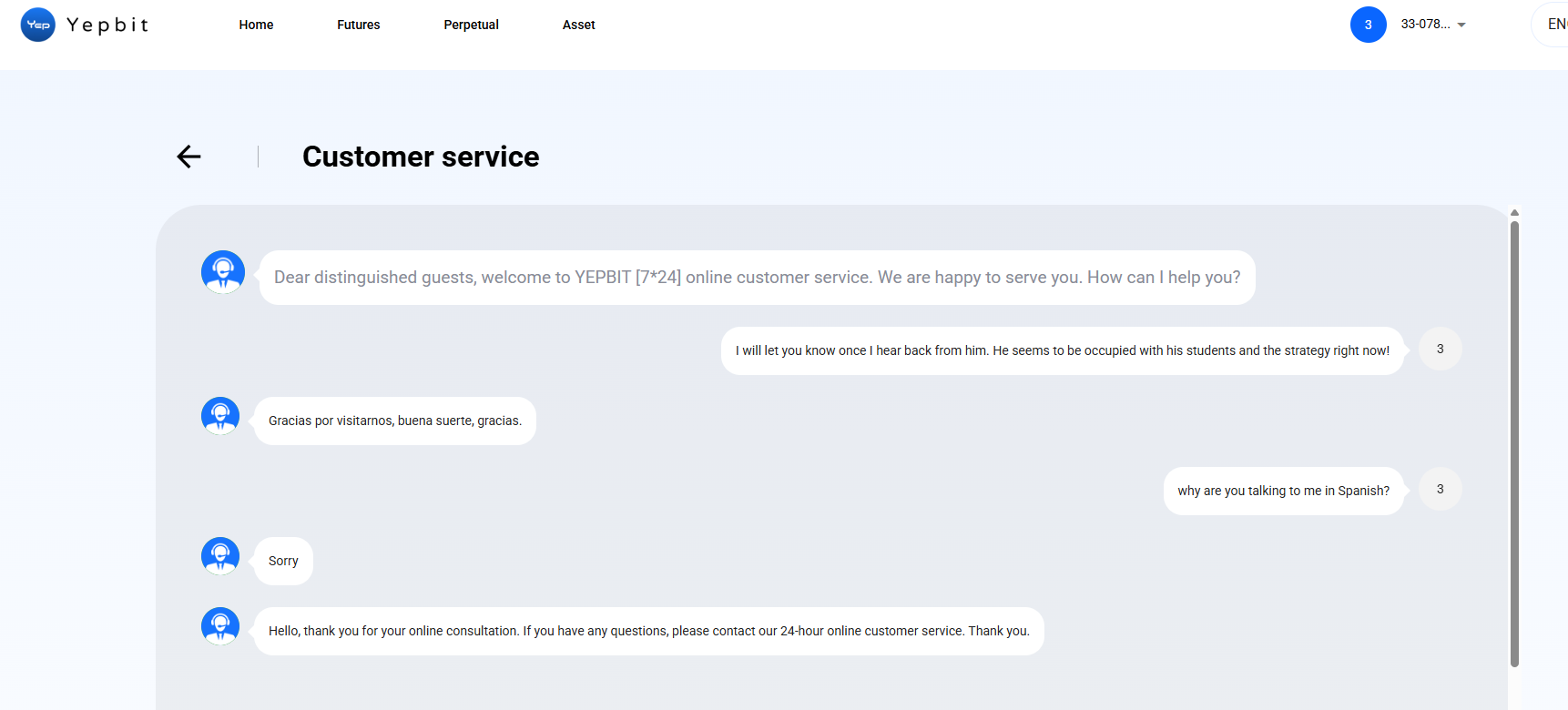
I tried to recontact him after that because Yepbit customer support told me to contact my supervisor without directly mentioning his name but I knew by then that Yepbit and FCIG aka Professor Brook were connected and played a game with their members. He has been staying silent the entire time after my withdrawal from Yepbit was refused even though I contacted him several times.
In the past he answered all my messages pretty quickly, but this time it feels different and he probably rather focuses his time on getting new victims into this Yepbit/FCIG connection game instead of wasting any more time with someone who is useless to him. He knows I am done because I want to get my money out and he knows I will not bring him in more active users so he is done playing his smiling face with me.
To be honest I am done, too, I lost my valuable time over this, too, especially on the day I was trying to withdraw my money. The stupid support experience that felt like a robot with all the hoops that I had to jump through just felt more than frustrating and a complete waste of time. However I am happy I went through this stressful experience because otherwise I could not have written this article to warn innocent new victims about these crooks.
The Fake Withdrawal Fee
The Yepbit platform also displayed a shocking message: any withdrawal over 100 USDT would incur a 20% fee — in my case, $363.96 USDC. They explained it as a “handling fee” and claimed my funds were temporarily frozen while under system custody. According to them, this was a normal security procedure, and the funds would supposedly be available after 24 hours.
At the time, the wording sounded technical and somewhat convincing. They instructed me to check whether my wallet supported the currency and network, framing it as a precaution to prevent “losses.” But in reality, no legitimate exchange charges a 20% withdrawal fee. The entire explanation was designed to confuse, delay, and pressure me into paying — a tactic often used in scams to extract a final payment before disappearing.
When I refused to pay, the platform reset my visible balance to zero and communication from both support and Professor Brook ceased entirely. His last message was manipulative, referencing my personal trip to my vacation destination and implying that completing the withdrawal would somehow prove the legitimacy of FCIG. It was the final stage of psychological manipulation, designed to make me feel guilty, pressured, and still invested in the scam.
At that moment, it became clear that the small profits and previous successful withdrawal were nothing more than bait — designed to build trust and lower my defenses before attempting the “final squeeze.”
The Final Trap: Blocking Withdrawals
The turning point came when I tried to withdraw my 1,819.06 USDT. After navigating the endless verification hoops, the withdrawal was submitted — only to be declined almost immediately. The platform claimed there was a security issue related to my IP address. This didn’t make sense. I was logging in from my home in France using my verified phone, with no VPN or unusual activity.
When I asked who I needed to contact about this, support vaguely referred to a “supervisor.” After insisting, I was told that I should speak with Professor Brook. It became clear that Yepbit, the exchange, and FCIG were not separate entities at all. The so-called exchange was operating under the professor’s control.
The moment I pressed withdrawal my account balance dropped to zero, and all communication from both the professor and support ceased. His last message was manipulative, referencing my personal travel plans to make me feel guilty and suggesting that completing the withdrawal would demonstrate the legitimacy of the yepbit exchange — a final attempt to extract money and maintain my trust.
At that moment, it became painfully clear: the profits I had seen, the successful small withdrawals, and the personal attention were all part of a carefully orchestrated scam. The system was designed to make me trust it, to invest more, and ultimately to lose everything — or pay unnecessary fees that would never have gone to a legitimate platform.
Red Flags in Customer Support
Customer support can be a huge giveaway in these scams. Some of the red flags I encountered included:
Copy-paste or robotic responses that didn’t answer questions.
Multiple language switches, sometimes to confuse or avoid giving a direct answer.
Repeated requests for identity verification, even after already submitting valid documents.
Evasive explanations about security issues, IP addresses, or “supervisor approvals.”
If you notice any of these signs while dealing with a financial platform, it is a strong indication that something is not right. Real exchanges maintain consistent, clear, and professional communication.
Why This Setup is Unusual for an Exchange
One of the most important red flags in this experience is that the Telegram group and the exchange were directly connected. In a legitimate crypto exchange, advisors, mentors, or external groups do not have the ability to block withdrawals, reset passwords, or control access to funds. Exchanges operate independently, with their own security systems, customer support, and regulatory oversight.
If you are ever instructed to follow a specific person’s instructions to access your money or rely on messages from a group for trading, it is a clear warning that the system may be compromised. The fact that Professor Brook and Sofia could manipulate both the platform and the social environment was a central reason the scam was so convincing.
How This Scam Actually Works (Analysis)
Once I stepped back and analyzed the situation, I realized how carefully the scam was structured. Here’s the sequence they used to lure and manipulate victims:
1. Trust-Building: The scammers create a professional-looking platform and present a friendly, knowledgeable “advisor.” They build personal connections, praise adherence to instructions, and make the victim feel part of a legitimate team.
2. Fake Profits: The trading results shown on the platform are controlled. Victims see small but consistent gains, reinforcing the illusion of success.
3. Small Successful Withdrawals: Allowing minor withdrawals strengthens trust. Victims believe the platform is real because they can “test it” and receive their money.
4. Pressure to Deposit More or Recruit Others: The scammers encourage reinvestment or team-building to expand their reach and increase potential profits from new deposits.
5. Withdrawal Blocking: When victims attempt larger withdrawals, the platform invents obstacles — IP issues, supervisor approvals, frozen funds — that prevent access to the money.
6. Final Extraction Attempt: They demand fees, taxes, or special approvals, often using guilt or urgency to manipulate victims into paying more.
7. Disappearance: Once they’ve extracted as much as possible, they cut off communication, zero out balances, or vanish completely. The cycle then continues with new victims.
The small profits and early withdrawals are deliberate psychological tools. By showing “success” first, they make victims more likely to invest larger amounts or comply with arbitrary fees, believing that the platform is legitimate.
How Scammers Trap You During Withdrawals
Withdrawals are often where victims get caught. Key tactics I experienced:
Fees and handling charges: Yepbit demanded $300 or 20% of the withdrawal.
System excuses: Funds “frozen under custody” or blocked due to “IP security issues.”
Supervisor references: Victims are told to seek approval from someone outside the normal support team, often the scam operator.
Account balance manipulation: If fees aren’t paid, the visible balance is zeroed.
Recognizing these tactics can help readers avoid sending money or losing access to their funds.
The Hidden Risk: Identity Theft
One of the most concerning aspects of this scam is the personal information collected during verification. Both my husband and I had uploaded:
Photos holding our passports
Scans of the front and back of our passports
Phone numbers and email addresses
These details are highly valuable to scammers. They can be used to:
Open fake accounts for money laundering
Create “proof of legitimacy” for new victims
Sell identity verification data on the dark web
Even though my husband and I did not lose our initial deposits and were fortunate to withdraw small amounts, the risk of identity misuse remains. There is no way to delete personal information from a scam platform like Yepbit.
To protect ourselves, we took several steps:
Renewing our passports and invalidating the old ones
Changing all passwords for accounts linked to the same email or phone number
Monitoring credit reports and potential misuse of our identity
If you have been caught in a similar situation, it is crucial to treat personal information exposure seriously, even if no money was lost.
Lessons Learned & Why Small Wins Don’t Mean Safety
Looking back, there are several clear lessons from my experience — things I wish I had recognized earlier.
Unrealistic Profit Promises: Any platform promising near-perfect results or daily profits without risk is almost certainly a scam. No legitimate trading system can guarantee consistent wins.
Unofficial Communication Channels: Legitimate exchanges rarely, if ever, rely on Telegram groups or personal “advisors” to deliver trading instructions.
Excessive Identity Verification Requests: Multiple requests for selfies, passport photos, or repeated KYC verification are red flags. Real platforms will not repeatedly demand the same documentation.
Suspicious Withdrawal Processes: High fees, frozen balances, or requiring “supervisor approval” to release funds are clear warning signs.
Emotional Manipulation: Scammers use personal messages, flattery, and guilt to keep you engaged and compliant. Pay attention to how much your emotions are being manipulated.
Look Beyond the Surface: Even if a platform shows small profits or allows a withdrawal, it doesn’t guarantee legitimacy. Small wins are often bait to build trust.
Recognizing these warning signs early can prevent significant financial and personal harm.
One of the most deceptive parts of this scam was the small profits and initial successful withdrawals. These are deliberate strategies to:
Build trust and create confidence in the platform.
Encourage reinvestment or further engagement.
Make victims believe the platform is legitimate before implementing blocking or fees.
Even if your account shows profits, it doesn’t mean the platform is safe. The initial wins are part of the bait.
Tips from Professionals on How to Spot, Resist Social Engineering & Recruitment Pressure
Cybersecurity experts and experienced traders offer guidance to help spot scams:
Verify the Exchange: Always check whether the exchange is regulated, has proper licensing, and is registered with relevant authorities.
Use Official Sources: Avoid taking financial advice from Telegram groups, social media, or unknown messaging apps. Legitimate advisors will operate through verifiable, official channels.
Trust Your Instincts: If anything feels off — confusing rules, inconsistent responses, high fees — step back.
Limit Personal Information: Only provide KYC details to reputable, verified platforms. Never share your passport, driver’s license, or personal photos with unverified sources.
Learn to Identify Social Engineering: Scammers are skilled at building trust, flattering you, and creating urgency. If pressure tactics are used, treat it as a warning.
Scammers often rely on psychological manipulation to make you comply. Here’s how to protect yourself:
Set boundaries: Never feel obliged to recruit others or expand teams.
Question pressure tactics: If someone is using guilt, urgency, or praise to influence decisions, step back.
Focus on the platform: Your only concern should be trading or withdrawing your funds, not building networks for someone else.
Document everything: Keep screenshots of messages, codes, and any instructions in case you need evidence.
Resisting these tactics can help you maintain control and avoid falling deeper into the scam.
Psychological Tricks Used in Crypto Scams
Scammers are experts at manipulating human behavior. Some tricks I experienced included:
Flattery and attention: Personal messages praising performance.
Guilt and obligation: Using your personal life or national stereotypes to pressure you.
Urgency and scarcity: Suggesting profits or signals are available only if you act quickly.
Social comparison: Highlighting top performers (like Sofia) to create envy or motivation.
Understanding these tactics helps readers recognize when their emotions are being exploited.
Next Steps if Your Identity is Compromised
If you’ve uploaded personal documents to a scam platform, immediate action is essential:
1. Renew your passport if it was exposed.
2. Change all passwords associated with emails, wallets, or financial accounts.
3. Enable two-factor authentication on all accounts.
4. Report the scam to local authorities or cybercrime organizations.
5. Monitor your credit and financial accounts for unusual activity.
6. Be alert for phishing attempts using your stolen personal information.
Even if you didn’t lose money, protecting your identity is crucial because scammers can misuse it in other ways.
More Resources, Books & Tools to Protect Yourself from Crypto Scams
If you or someone you know has been affected by a scam like Yepbit or FCIG, there are official organizations and resources available:
Sharing knowledge and reporting incidents not only protects you but also helps prevent others from becoming victims.
Protect Your Identity and Information (Your Essential Tools for Defense)
Sophisticated scams like the one you experienced often harvest vast amounts of personal data for future exploitation. Protecting your identity and digital footprint is crucial to preventing long-term financial damage that could occur long after the initial scam.
What is it? Identity Theft Protection is a service that actively monitors your personal information (Social Security number, bank accounts, and credit reports) across the dark web and public records for any signs of misuse or fraud.
How it Works (The Mechanics of Protection): Identity monitoring services continuously scan billions of data points across public records, credit bureaus, and the vast, hidden corners of the dark web. If your sensitive information is discovered—whether as part of a data breach, a new credit card application, or an unauthorized change of address—the service immediately issues an alert. This critical early warning allows you to lock down accounts or contact authorities before major financial damage occurs.
Why it Matters After a Scam: After an incident involving personal contact and financial transactions (like Yepbit/FCIG), monitoring your identity is critical. This service provides an essential layer of defense by alerting you to unauthorized account openings, credit checks, or other signs that your stolen data is being exploited, allowing you to react immediately and mitigate harm.
For readers seeking different features, monitoring scope, or integrated digital security, the following services are highly rated alternatives, often including crucial features like three-bureau credit monitoring and advanced dark web scanning.
Aura is ranked as a top overall service known for bundling comprehensive identity monitoring with a full suite of digital security tools (VPN, Antivirus, Password Manager) and generally offering fast fraud alerts.
How it Works
Aura goes beyond simple monitoring by integrating digital security tools across your devices. In addition to watching the dark web and credit bureaus for unauthorized activity, it actively defends your computer and phone against malware and phishing attempts, providing a vital layer of proactive defense.
Why it Matters
This all-in-one approach addresses the two primary risks: stolen data being exploited (monitoring) and new data being compromised through digital attacks (proactive security). Its three-bureau credit monitoring is typically included in all plans, giving users a complete picture of their financial identity.
LifeLock (often bundled with Norton 360) is one of the most established names, offering comprehensive monitoring combined with Norton’s robust antivirus and digital security software.
How it Works
LifeLock monitors an extensive number of unique identity risks, including the creation of new utility accounts, home and auto title changes, and court records. By integrating with the powerful Norton 360 suite, users get industry-leading malware, VPN, and antivirus protection alongside their identity monitoring.
Why it Matters
The sheer breadth of monitoring for non-credit fraud offers coverage where other services might miss a sign of identity takeover. The integration with Norton 360 is ideal for the user who wants a single, established solution for both their physical identity (SSN, credit) and their digital devices (computer, phone).
To continue your education on cryptocurrency safety, fraud prevention, and sound investment principles, consider exploring the following books.
Focus on Scams and Security
These titles offer deep dives into the complex social engineering tactics used by scammers, similar to the one I experienced with the Yepbit scam:
The Pig Butchering Scam: How I fell for it & everything I learned by M.L.
Why read it: This book is a raw, first-hand account from a victim of a sophisticated “pig butchering” crypto scam, offering vital emotional and practical lessons on recognizing the manipulation tactics.
The Little Book of Crypto Crime (Metropolitan Police)
Why read it: A concise guide detailing various types of crypto fraud, including investment scams, romance fraud, and technical attacks like phishing, along with practical prevention tips.
The Crypto Launderers: Crime and Cryptocurrencies from the Dark Web to DeFi and Beyond by David Carlisle
Why read it: Provides a wider context on how criminals exploit the cryptocurrency ecosystem, helping you understand the financial and technical landscape of fraud.
Building Foundational Crypto Knowledge
A strong understanding of the basics is your best defense against complex scams. These books cover the fundamentals of crypto and smart investing:
The Basics of Bitcoins and Blockchains: An Introduction to Cryptocurrency and the Technology That Powers It by Antony Lewis
Why read it: Excellent for beginners, it demystifies the technical concepts of Bitcoin and blockchain, which is essential for evaluating a platform’s true legitimacy.
Cryptoassets: The Innovative Investor’s Guide to Bitcoin and Beyond by Chris Burniske & Jack Tatar
Why read it: Offers a strategic framework for assessing and valuing digital assets, helping you identify what constitutes a realistic investment versus a fraudulent promise of easy money.
Cryptocurrency Investing for Dummies by Kiana Danial
Why read it: A practical, step-by-step guide on buying, securing, and developing investment strategies for crypto while focusing on minimizing risks.
Conclusion: The Truth About the Yepbit / FCIG Scam
The bottom line is clear: Fidelity Capital Investment Group, ‘Professor Brook,’ and ‘Sofia’ are not legitimate. The entire Yepbit platform is a fraudulent operation designed to steal your money.
Looking back, I am grateful that I was able to withdraw some funds and protect most of my investment. But the experience was a powerful reminder that even small, seemingly harmless scams can be sophisticated and emotionally manipulative.
The Yepbit / FCIG scam illustrates how carefully scammers build trust, create the illusion of legitimacy, and exploit human psychology to extract money and personal information. Falling for it does not mean you are careless — it means the scammers were skilled at convincing you their operation was real.
By sharing my story, my hope is to prevent others from making the same mistakes. Take time to verify every platform, protect your personal information, and always trust your instincts. With awareness and caution, you can participate safely in the cryptocurrency world and avoid becoming the next victim. Use this experience as your guide to spot and resist these sophisticated psychological traps, ensuring you protect your finances, your identity, and your loved ones.
I recommend you report all fraudulent activity to the relevant authorities. I wish you the best of luck in your future financial crypto endeavors.
Q&A Section
Q: Why did they let me withdraw money at first? A: Small, early withdrawals are part of the scam. They create trust and convince you the platform is legitimate, encouraging larger deposits later.
Q: Can scammers use my passport for anything? A: Yes. They may use it for identity theft, opening fake accounts, or selling your information online.
Q: Is there a way to get my funds back? A: Often, no. Once scammers block withdrawals and disappear, recovery is extremely difficult. Reporting the incident is the safest course.
Q: What if I already sent the withdrawal fee? A: Consider reporting the payment to your bank or wallet provider, as it may be classified as fraud. Document all communication as evidence.
Q: Can I still use my Telegram account safely? A: Yes, but block and report the scam accounts. Avoid engaging with anyone connected to the scam group.
Your Next Steps – Where to Go From Here
If you’ve been affected by Yepbit, FCIG, or a similar scam:
1. Stop Communication: Do not reply to scammers or advisors.
2. Secure Your Accounts: Change passwords, enable two-factor authentication, and monitor email and financial accounts.
3. Report the Scam: Submit reports to cybercrime authorities in your country. Include all evidence, screenshots, and correspondence.
4. Protect Your Identity: Renew passports, monitor credit reports, and watch for suspicious activity.
5. Educate Yourself: Read credible resources about cryptocurrency safety and scams.
6. Share Your Story: Your experience may help prevent others from falling victim.
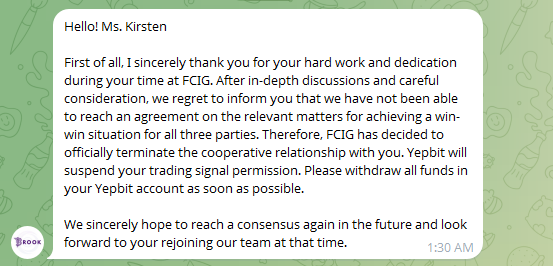
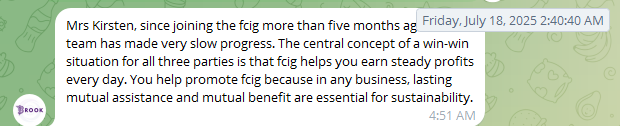
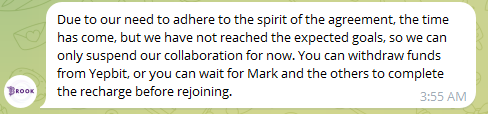
More Screenshot Proof of How this Yepbit/FCIG Scam Works (All Screenshots assembled from the Jonathan Brook Telegram Channel)
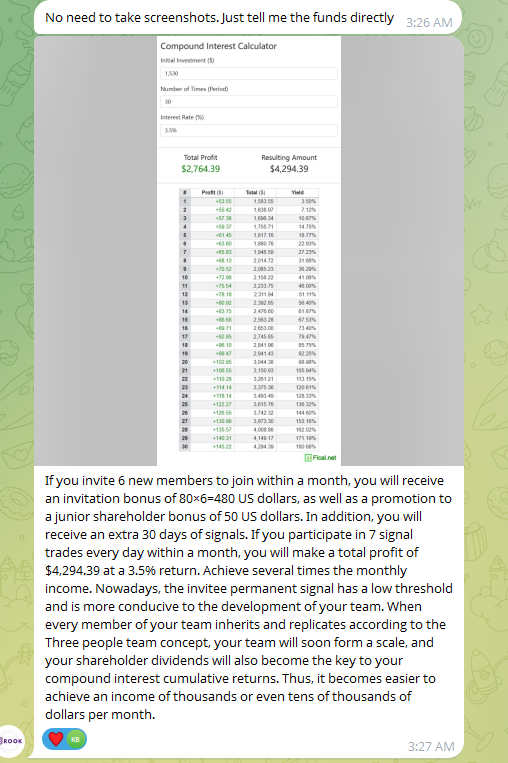
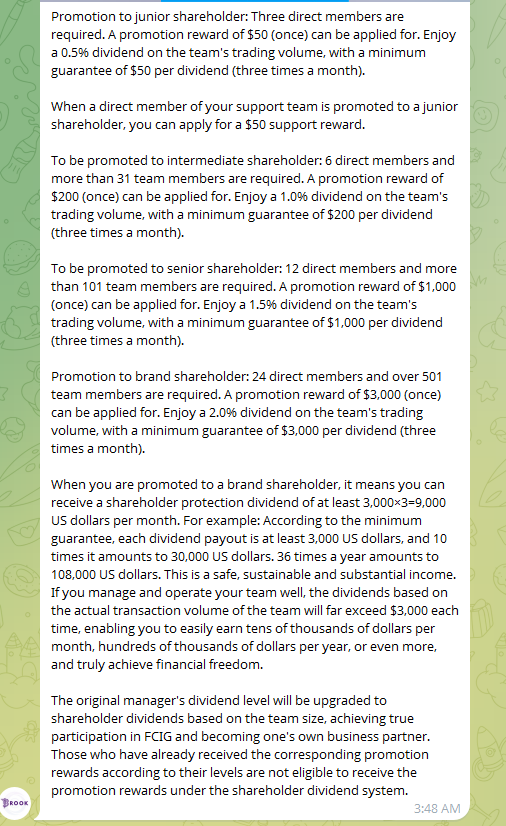
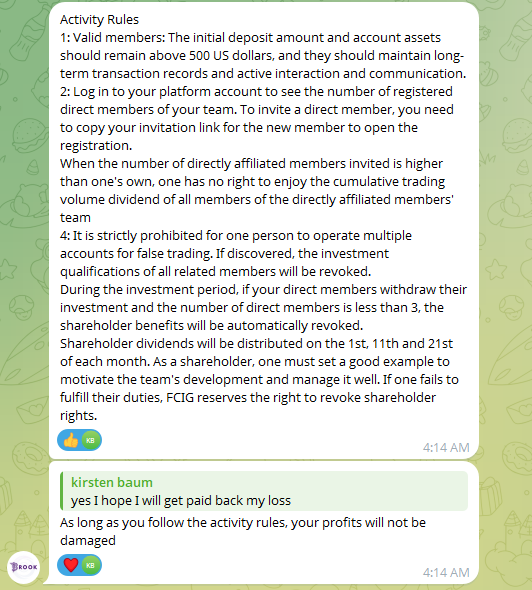
At the time I am writing this article I was already banned from the main FCIG Telegram group, but he kept chatting with me via his Jonathan Brook Telegram channel to pressure me into finding new active team members. An active team member needs to put at least 300 USDT into the Yepbit exchange. So here are all the screenshots I assembled during out daily conversations.
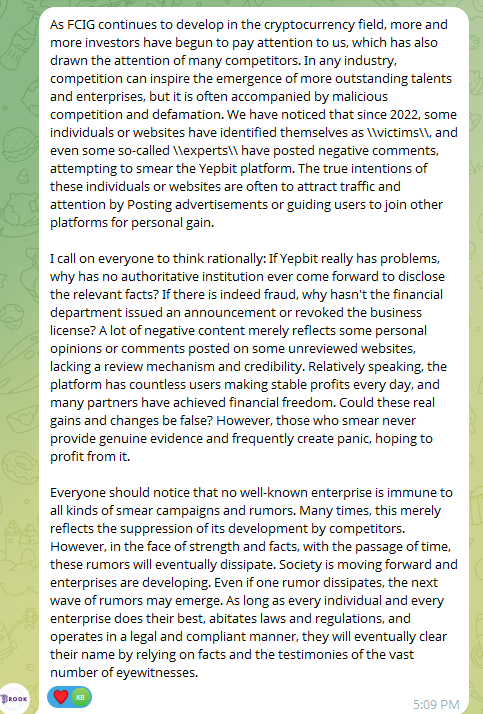
These screenshots prove the kind of pressure tactics Professor Brook is using to grow his team of members that he then can exploit in order to get more and more active people under his control. In my case and that of my husband and our friend we did not lose our initial investments, but there might be a couple of other related motives behind this scams like identity theft and what not.
We are all three reporting this to the authorities so the necessary work can be done to find out what is going on behind closed doors.
If I can find out more elements regarding this scam I will report them here and I will update this article accordingly.
Let’s get into some more proof of how this Yepbit / FCIG / Professor Brook scam works…
UPDATE Cliqly Email Marketing Scam: Important Information for July 2025 – Cliqly’s Bankruptcy and Your Next Steps
As of July 2025, there are critical new developments regarding Cliqly and Bobby Jones that demand your immediate attention, especially if you are owed money.
We have recently uncovered that Bobby Jones secretly declared Cliqly bankrupt in June 2025. This wasn’t a sudden collapse; it appears to be a calculated move. While members were left waiting and hoping for commissions, Bobby Jones allegedly moved all of Cliqly’s assets to his new platform, Clickerr, which he is now operating on Whop. This looks less like a business failure and more like a deliberate attempt to evade accountability and continue collecting from new unsuspecting users.
My personal loss of over $14,000 in accumulated weekly commission payouts between August and November 2024 (when Bobby Jones abruptly stopped all payments, citing “technical glitches”) now makes agonizing sense in light of this bankruptcy filing.
Crucial Legal Action: The Chapter 7 Bankruptcy Trial
For all affected individuals, there will be a Chapter 7 bankruptcy trial via Zoom call on August 6, 2025, at 4:00 PM CST (Central Standard Time). This is a vital opportunity to be heard and potentially recover what is owed to you.
Your Immediate Call to Action:
If you are a former Cliqly affiliate and are owed money, it is imperative that you act now to protect your rights and potentially recover your funds:
Get on the Creditor Matrix: You must be added to the official list of creditors. Click here and download the Declaration Form (3). Fill it out with your information and send it to the email indicated. This ensures you receive all legal notifications and communications related to the bankruptcy. You might be required to send in proof later but for now you do not have to send any additional proof or screenshots via email attachments. Wait for further instructions and provide everything they need later.
Clearly identify you as a creditor (a former Cliqly affiliate).
State the precise amount of unpaid commissions you are owed.
Explicitly request to be added to the creditor matrix.
Include a SUMMARY of your supporting evidence (e.g., total amount of unpaid commissions, relevant dates, and types of earnings). You should keep your actual screenshots, affiliate dashboard information, or communications ready to provide to the court only upon request, typically if assets are identified for distribution.
Attend the 341 Meeting (Zoom Call):
Date: August 6, 2025
Time: 4:00 PM CST (Please note: This time will be very late for those in Europe and other time zones, but your participation is extremely important.)
How to Join: The specific Zoom Meeting ID and password are required. I am actively working to secure these precise details and will share them in a subsequent update to this article. Be prepared to log in via Zoom and potentially unmute yourself when your name or case is called.
I will update this article with any further submission instructions as soon as they become available. Please mark August 6th, 2025, at 4:00 PM CST on your calendar. This is our collective chance to demand transparency and accountability from Bobby Jones.
If you’ve come across the term Cliqly, you might be wondering whether it’s the real deal or just another scam lurking in the vast sea of online platforms. More specifically, you’ve probably seen Bobby Jones associated with this platform and the massive promises being made about how easy it is to earn large payouts. But here’s the reality: Cliqly is not legit—and I have the proof to back it up.
Who Should Read This Article?
This article is for anyone who:
1. Is Interested in Online Marketing & Digital Platforms
If you’re involved in online marketing, affiliate marketing, or any kind of digital business, this article is essential reading. Understanding how to spot potential scams and recognizing the signs of a platform that’s not living up to its promises is crucial for building a sustainable and successful business online.
2. Has Been Promised Big Payouts with Little Effort
If you’ve been promised easy money, huge returns, or a “get-rich-quick” scheme, this article is for you. Scammers often lure people in with the idea of easy income, and recognizing these tactics early on can save you from falling into a trap.
3. Is Currently Involved with Cliqly or Considering Joining
If you are already involved with Cliqly or considering joining the platform, this article is a must-read. It provides real, firsthand insights into the issues surrounding the platform, as well as actionable tips on how to avoid scams and ensure you’re working with a legitimate company.
4. Has Been Waiting for Payouts or Is Struggling with Payment Delays
If you’re tired of waiting for unpaid commissions or have been strung along by promises of payouts that never arrive, you’re not alone. This article sheds light on these problems and offers solutions to help you find a platform that actually delivers.
5. Wants to Protect Their Investments
For anyone investing time, money, or resources into online platforms, it’s crucial to protect those investments. This article will guide you in recognizing the signs of scams, help you navigate potential risks, and show you how to make informed decisions about where you put your hard-earned money.
6. Values Transparency and Integrity
If you’re someone who values transparency, integrity, and accountability from the companies you do business with, this article will resonate with you. It’s a call to hold platforms accountable and demand the standards of honesty and respect that we all deserve.
7. Is New to the Digital Marketing World
If you’re new to the online marketing world and unsure about which platforms to trust, this article is a guide to help you avoid the scams that plague the industry. Learn from others’ mistakes and take proactive steps to ensure you’re joining a platform that values its members.
8. Wants to Build a Real Online Business
If you’re committed to building a real, sustainable online business, you need to stay informed and be aware of platforms that promise quick gains with little to no real value. This article will help you differentiate between legitimate opportunities and scams, empowering you to make better choices moving forward.
The Promise: Big Earnings, Big Hype
When I first joined Cliqly, I was sold on the idea of a lucrative opportunity that promised quick payouts and a simple process. I was even told I would receive $14,000+ in payouts by April 2025—something that seemed like a dream come true at the time. But as the months went by, I quickly realized I’d been lured into something much darker and more deceptive than I had ever anticipated.
Here’s the kicker: The platform hasn’t paid out a single dime, and there are members out there, including myself, who are still waiting for over a million dollars to be paid out. Bobby Jones, the so-called founder, has kept us in the dark, and it’s clear that Cliqly is running on smoke and mirrors, with no real intention of paying anyone back.
The Folded Paper “Proof”
Perhaps the most absurd aspect of this whole ordeal is how the company is handling payouts. In a so-called “Town Hall” webinar that was supposed to address our questions, Bobby Jones and his team presented something so laughable it’s hard to believe they thought anyone would take it seriously: a folded piece of paper.
Yes, a wrinkled paper was their “proof” of the payout ledger. Forget about real-time dashboards, spreadsheets, or blockchain receipts. In this case, we got a piece of paper pulled out of a CEO’s glove box—hardly what you’d expect from a professional platform dealing with millions of dollars. How can anyone take a company seriously when they present their financials this way? It’s the ultimate red flag.
The “Glitch” That Never Gets Fixed
Now, let’s talk about the infamous “technical glitch” that’s been used as the reason for every delay, missed payout, and unauthorized charge. Bobby Jones claims this glitch isn’t his fault and insists that everything’s being worked on. But here’s the issue: Members are still facing mysterious charges, like $97 for services we never signed up for, and support tickets are left unanswered.
In fact, even after the Town Hall event where Bobby gave a long-winded excuse about how “everything in his power” was done to fix the issues, nothing has changed. We’re still dealing with unauthorized charges, glitches, and the same lies. He even advised members not to cancel their cards so that refunds could be processed through the “original card.” But we all know that’s a tactic meant to buy time and avoid paying back those owed money.
The CEO Who Dodges Accountability
At the center of this whole mess is Bobby Jones, a man who’s supposed to be the visionary leader of the platform but has failed to deliver on any of his promises. With over 26 years of experience, you’d think he would know better than to allow such chaos to unfold.
But instead of taking accountability, Bobby Jones has doubled down on his mistakes. When the initial version of Cliqly was working fine, driven largely by quality referrals, he decided to slash the entry cost from $1500 to $0, opening the floodgates to anyone—including fraudsters. This move was a direct invitation for chaos, and as expected, it’s led to the platform’s current mess.
A responsible CEO would’ve fixed the issues, restored order, and ensured the platform could provide value to its real members. But not Bobby. He chose to double down on the chaos, despite knowing it was harming the community.
The “Future of Cliqly” Is Nothing But Smoke and Mirrors
If you thought things couldn’t get worse, let’s talk about the so-called “future of Cliqly”. In the town hall meeting, Bobby Jones rambled on about the “future” of the platform, but instead of addressing real concerns, the conversation focused on only three sanitized topics:
Payouts (which are still a joke)
Glitch charges (still unresolved)
The future of Cliqly (which, honestly, looks pretty grim)
When I asked a legitimate question—“How can you expect people to keep building this business if no income is flowing?”—it was ignored, along with everyone else’s tough questions. Instead of taking accountability, Bobby Jones chose to deflect and avoid any meaningful discussion.
A Platform of Deception
Let’s break this down and compare:
The Good Guys:
Transparent payouts you can verify in real-time
Support teams that actually respond
Open, active social channels for feedback and interaction
Real-time dashboards (not folded pieces of paper)
Founders who stand behind their words and actions
The Shady Operators:
Folded paper as “proof”
Payouts that never show up
Closed comment sections to hide negative feedback
Charging for services you never signed up for
Unanswered support tickets and broken trust
It’s clear: Cliqly is in the latter category.
Real Consequences: The Personal Toll of Cliqly’s Lies
I’ve spoken to several people who have faced life-altering consequences as a result of trusting Cliqly. Some have lost their homes, others have faced financial ruin, and a few even took out mortgages to grow their businesses—only to be left with nothing.
Meanwhile, Bobby Jones continues to collect money from new members who are promised the same opportunities and returns, but just like us, they’re left waiting for payouts that will never come.
This isn’t growth. This is a Ponzi scheme disguised as a marketing platform.
The Bottom Line & My Final Verdict: Don’t Fall for the Lies of Bobby Jones
If you’re new to this industry, learn from my mistakes. Don’t get lured in by false promises and empty hype. Always check platforms on ScamAdviser.com before you invest your time or money. It’s easy to get swept up in the excitement of something that seems too good to be true, but trust me—Cliqly is not legitimate; it’s a bankrupt platform, and its founder, Bobby Jones, has been moving assets to his new venture, Clickerr on Whop, while leaving creditors in the lurch.
I’ve personally lost out on over $14,000 in accumulated weekly commission payouts between August and November 2024 because Bobby Jones stopped paying members, revealing his true agenda. We’ve now discovered that Cliqly was secretly declared bankrupt in June 2025, a move that coincides with the apparent transfer of assets to Clickerr. This isn’t just a missed payment; it’s a legal fight, and there’s a Chapter 7 bankruptcy trial via Zoom on August 6, 2025, at 4:00 PM CST.
I’ve moved on to a platform that values transparency and integrity. They’ve paid out 249 people in the last 24 hours, and I can withdraw my earnings at the push of a button. No drama. No delays. Just a solid, transparent system that works.
If you’re tired of waiting for a payout that will never come, and if you’re ready to work with a platform that actually pays its members on time, let me connect you with the right opportunity.
Don’t make the same mistake I did. Stay informed, stay alert, and never settle for less than what you deserve.
If you want to finally build something solid and transparent, DM me or comment “PAYOUT” below. Let’s make sure you’re not another victim of the Cliqly scam.
Insider Tips & Tricks to Prevent Scams
Here is a video which I encourage you to check out to get a deeper insight into what’s really going on behind the scenes with scams and how to tell if a program is a scam.
Click the play button to watch it below…
In the world of online platforms and digital marketing, scams are unfortunately more common than we’d like to admit. But the good news is that you don’t have to fall victim to these fraudulent schemes. With the right knowledge and tools, you can protect yourself and your investments from platforms like Cliqly and others that are not what they claim to be.
Here are some insider tips and tricks to help you prevent falling for scams:
1. Always Check Trust Ratings & Reviews
Before committing to any online platform, make sure you do your due diligence. Check trust ratings and reviews on reliable websites like ScamAdviser. This site will give you an honest breakdown of the website’s trustworthiness by analyzing various factors like its age, owner information, and more. If a platform has a low trust score or a series of bad reviews, it’s best to steer clear.
2. Look for Transparent Payouts & Real-Time Data
Legitimate platforms will always have transparent payment processes that you can track in real-time. Platforms with hidden payout information, like Cliqly’s folded paper “proof,” are major red flags. A trustworthy platform will allow you to verify payouts through dashboards, spreadsheets, or blockchain receipts. If you can’t easily see the numbers or if they seem evasive, don’t trust it.
3. Avoid Platforms with Unsolicited Emails or Pressure Tactics
Scammers often use pressure tactics, such as emails promising huge returns or “limited-time” offers that seem too good to pass up. If you’re being bombarded with unsolicited emails or being pushed into joining quickly, this should be an immediate warning sign. Take your time, research, and don’t rush into anything.
4. Research the CEO & Leadership Team
Check out who is running the platform. Do a quick search to see if there are any red flags associated with the founder or CEO. If they’re dodging questions, avoiding transparency, or you can’t find any information about them, it’s probably a scam. A real CEO will be easy to find and will be open to questions and feedback.
5. Watch for Unexplained Delays in Payouts
One of the biggest signs of a scam is delayed payouts. If a platform promises a payout but keeps delaying it without clear reasons or legitimate explanations, it’s usually a scam. A reputable platform pays out on time, every time, and provides detailed records for you to check.
6. Leverage YouTube and Forums for Reviews
Before you sign up for anything, search for video reviews and discussions in online forums. YouTube can be a goldmine for uncovering the truth behind online scams. Users often post video proof of bad experiences, and it can be a good way to learn from others’ mistakes.
7. Check for Red Flags in Marketing Messages
Scammers tend to use a lot of over-the-top promises like “guaranteed returns,” “get-rich-quick” schemes, or “unrealistic results.” If you’re being promised easy money with little effort, or if the company seems to be promising more than they can deliver, these are huge red flags. Don’t fall for it.
8. Use Scam Checker Tools Like ScamAdviser
Before investing time or money into any platform, always use a scam-checking tool like ScamAdviser to check the trustworthiness of the website. It’s a great way to verify whether a platform is legitimate or whether you should keep your distance. ScamAdviser can help you quickly determine if the site is safe and if there are any warnings associated with it.
More Resources & Info: How to Prevent Scams
Staying informed and educated is the best way to protect yourself from falling for online scams. There are plenty of resources available to help you recognize the warning signs, understand the tactics used by scammers, and make smarter decisions in the digital world. Below are some additional resources, books, and tools to ensure you stay one step ahead of fraudsters.
1. ScamAdviser: The First Step in Scam Prevention
Before you invest your time, money, or trust in any online platform, always check its reputation using ScamAdviser. This free tool analyzes websites based on various factors, such as domain age, ownership transparency, and user reviews, to give you an overall trust rating. It’s a quick and easy way to spot potential red flags before you get involved.
2. Report Scams & Seek Help
If you believe you’ve encountered a scam or been affected by fraudulent activity, don’t stay silent. Report it to official bodies such as:
Federal Bureau of Investigation (FBI) – Internet Crime Complaint Center (IC3): If you’ve been scammed online or become a victim of cybercrime, you can file a complaint with the FBI’s IC3. Visit IC3
In addition, local authorities may also be able to help if you’ve been personally harmed by a scam. Always reach out to the appropriate law enforcement agencies, including:
Your Local Police Department: If you’re the victim of fraud or financial crime, the police can help investigate the issue.
The Sheriff’s Office: Many local sheriff’s offices also handle consumer fraud and scams. Contact them for assistance.
Attorney General (AG): Your state’s Attorney General is responsible for consumer protection. If you’ve been scammed, you can file a complaint with their office. Find your state’s AG here
3. Report to Media Outlets: Radio & TV Stations
Another effective way to spread awareness of scams is by contacting local media outlets. Radio and TV stations often investigate scams and share them with the public to protect others from becoming victims. You can reach out to the consumer protection segments of your local news or radio stations to report fraudulent activity or share your story. They may conduct investigations, air reports, or provide valuable advice on avoiding scams.
Contact your local TV station (Search online for the news stations in your area).
Call local radio stations that have consumer protection segments.
National TV Networks like ABC, NBC, or CBS have consumer protection segments where they investigate fraud and scam-related cases.
4. Amazon Book Recommendations: Protect Yourself from Scams
Reading up on scam prevention can provide you with a wealth of knowledge to help you recognize scams when they come your way. Here are some highly recommended books that can help you identify red flags and make informed decisions in the world of online business:
“Scam Me If You Can” by Frank Abagnale This book is written by one of the most famous fraud experts in the world. Frank Abagnale, the subject of the movie Catch Me If You Can, reveals the tricks scammers use and how you can protect yourself from being a victim.
Written by cybersecurity expert May Brooks-Kempler, whose passion for cybersecurity awareness began in the 1990s while exploring hacking communities, this cybersecurity for dummies 2024 guide blends storytelling with actionable strategies. It’s not just another cyber security book—it’s your practical anti-hacking guide to navigating the digital age safely.
“How to Cheat at Everything: A Con Man Reveals the Secrets of the Esoteric Trade of Cheating, Scams, and Hustles by Simon Lovell
Gambling is more popular than ever, with multi-million dollar poker tournaments on television, gambling themed movies like Rounders gaining in popularity, and casinos opening in just about every state of the U.S. How to Cheat at Everything is a roller-coaster ride through bar bets, street hustles, carnivals, Internet fraud, big and small cons, card and dice games and more. You’ll even find the exact frauds that the NYPD regard as the most common and dangerous today, and learn top tips on how to avoid each one. This inside information comes from Lovell’s lifetime of experience in the field, along with additional information from both sides of the law. Not just a “here’s how the con works” book; this guides you through the set up, the talk, the sell, everything about the con, and how you can be suckered into one. If you think that you can’t be conned; then you are already halfway to being so! There is no preaching here, just a fun ripping ride through a world so few know about. You’ll meet wild, eccentric and larcenous characters and you’ll learn how they work their money-making deeds, all without having to risk a penny of your own money.
A riveting look at the perpetrators, victims, and whistleblowers behind financial crimes, from forensic accounting expert and documentarian Kelly Richmond Pope.
5. Online Communities & Forums for Scam Awareness
Sometimes, the best way to learn about potential scams is by connecting with others who have had similar experiences. Online forums and communities are great places to exchange knowledge and stay up-to-date on the latest scams in the digital marketing world.
Reddit – r/Scams: A subreddit dedicated to discussing scams, frauds, and schemes that people have encountered. Users share their experiences, discuss warning signs, and post advice on how to avoid falling victim. Visit r/Scams
TrustPilot: Use TrustPilot to check reviews and ratings for any platform you’re considering joining. Real user reviews can give you an honest perspective on whether a company is legitimate or a scam. Visit TrustPilot
ScamWatch: This Australian government site offers advice on avoiding scams and provides a detailed list of reported scams. While it’s based in Australia, the information is globally relevant. Visit ScamWatch
6. Be Aware of Fake Social Proof
Scammers often use fake testimonials, fake reviews, and manipulated social media proof to gain your trust. Make sure you look beyond the shiny facade of “success stories” on platforms like Instagram, Facebook, and YouTube. Always verify claims by searching for independent reviews and checking with legitimate sources.
7. Know Your Legal Rights
If you feel you’ve been scammed, it’s important to know your legal rights and the steps you can take to seek justice or recover lost funds. Resources like the Consumer Financial Protection Bureau (CFPB) and local consumer protection agencies provide free advice on how to file complaints and protect yourself from fraud.
By arming yourself with the right knowledge, taking proactive steps, and utilizing trusted resources, you can avoid falling victim to scams in the online marketing world. Remember, scams prey on those who are unprepared, so equip yourself with the tools to spot a fraud before it’s too late.
Stay safe, stay informed, and don’t let scammers take advantage of you.
Roadmap for Commission Recovery: Resolving Your Situation with Cliqly Step by Step (A 7 Step Process)
If you’ve found yourself in the same frustrating situation as many others with Cliqly, waiting on unpaid commissions and feeling stuck, you’re not alone. However, the good news is that you don’t have to sit idly by. There are specific actions you can take to recover your commissions and take control of your situation.
Here’s an action-focused roadmap for commission recovery to help you get things moving with Cliqly and avoid further disappointment.
Step 1: Document Everything
Before taking any action, it’s crucial to gather evidence and document your interactions with Cliqly. This is vital for supporting your claims. You should:
Save all email communications, including any promises or updates related to your payout.
Take screenshots of your account balance, pending payouts, and any technical errors or charges that should be refunded.
Log your interactions with customer support and the results (or lack thereof) that you receive. This can act as proof if you need to escalate the matter.
Step 2: Reach Out to Cliqly Support
The first step in recovery is to try to resolve the situation directly with Cliqly’s support team. Although their response times might be slow or nonexistent, it’s still important to submit a formal support ticket. Be concise, but clear about the issue and the specific payout you are owed.
Include the following in your support request:
Your full name and account information.
A detailed description of the payout you are expecting.
Proof of your commission (screenshots, emails, etc.).
A polite but firm request for the immediate processing of your payout.
If you don’t hear back within a reasonable time frame, follow up and escalate the issue.
Step 3: Use Social Media and Public Platforms
If traditional customer support avenues fail, don’t hesitate to use public platforms to raise awareness about your situation. Often, companies respond more quickly when their reputation is on the line.
Post on Cliqly’s social media pages (Facebook, Twitter, LinkedIn, etc.) about your experience and politely ask for resolution.
Join and post in online forums (such as Reddit or scam-specific groups) to share your story and get advice from others. It’s possible other affiliates may have valuable insight into the process.
Step 4: File Complaints with Consumer Protection Agencies & Engage with the Bankruptcy Court
If the issue persists and you’re not receiving the promised payouts, it’s time to take decisive action. Crucially, you must engage directly with the ongoing bankruptcy proceedings as outlined in the “UPDATE: Important Information for July 2025 – Cliqly’s Bankruptcy and Your Next Steps” section at the very beginning of this article. This is your primary avenue for potentially recovering owed commissions.
Additionally, you should report the situation to other relevant authorities:
Federal Trade Commission (FTC): They handle cases of fraud and deceptive business practices. File a complaint with the FTC
Better Business Bureau (BBB): If Cliqly is registered with the BBB, you can file a formal complaint. File a complaint with the BBB
Internet Crime Complaint Center (IC3): For any internet-based fraud, report it to the FBI’s IC3. Report to IC3
Step 5: Know Your Legal Rights
If you are still not getting a resolution, consider seeking legal advice. Depending on the situation, you may have grounds for pursuing your case legally, especially if Cliqly is violating consumer protection laws or failing to honor its financial commitments.
Consult a lawyer who specializes in consumer fraud or contract law. They can give you insight into whether you have a case and guide you through the legal process if necessary.
Step 6: Look for Alternative Platforms
While recovering your commission is important, you may also want to consider moving on from a platform like Cliqly if their business practices are too risky. Look for more reliable and transparent platforms that offer solid payout structures and are proven to be trustworthy.
As I mentioned earlier, there are legitimate platforms out there that allow you to see real-time payouts, interact with a responsive support team, and enjoy the peace of mind that comes with a reputable business. If you want to make sure you’re working with the right platform, reach out to me, and I’ll be happy to recommend a platform with true integrity.
Step 7: Avoid Future Scams: Do Your Research
The key to avoiding scams in the future is being proactive and doing thorough research before joining any new platforms. Always check:
ScamAdviser: To verify the legitimacy of the platform.
Online reviews: Search for user feedback from other affiliates or clients.
Company transparency: A trustworthy platform should be open about its financial status and payout practices.
The roadmap for commission recovery is about taking action in a strategic and systematic manner. By documenting everything, reaching out to support, leveraging public platforms, and knowing your legal rights, you can take steps toward recovering your commissions and ensuring that you don’t fall victim to future scams.
Don’t give up on what’s rightfully yours. Take control of the situation, and use the resources available to you to get your payout.
Conclusion: Stand Up for What You Deserve
The experience with Cliqly has been a tough lesson in the dangers of falling for flashy promises and hidden agendas. What started as an opportunity for financial growth has turned into a fight for transparency, trust, and accountability. But here’s the thing: you don’t have to be a victim.
Whether you’ve already been caught up in the chaos or you’re simply trying to protect yourself from making the same mistakes, now is the time to take control. By following the Roadmap for Commission Recovery, utilizing scam-prevention resources, and standing up for your rightful payouts, you can start recovering what’s owed to you and ensure you’re not left in the lurch by a shady platform again.
The key takeaway here is simple: never settle for empty promises. The industry is filled with platforms that claim to offer success, but it’s up to you to do your homework, stay vigilant, and always prioritize integrity. Remember, your time and hard work are valuable—don’t let anyone waste them.
If you’re ready to break free from the scam cycle, there are platforms out there that are transparent, reliable, and dedicated to your success. Platforms where real payouts happen, where leadership shows up, and where integrity is non-negotiable.
I hope this article has not only shed light on the reality of the Cliqly scam but also given you the tools and confidence to take action. Whether it’s by reclaiming your commissions, avoiding future scams, or finding a legitimate platform that truly works for you, it’s time to build something solid and trustworthy.
Don’t let the setbacks stop you. Stay informed, stay proactive, and always demand what’s rightfully yours.
Let’s build with integrity. Let’s build with trust.
If you’re looking for a legitimate platform that actually delivers, don’t hesitate to reach out. I’ll connect you with the right resources and the people who are changing the game for the better.
Your Next Step: How to Break Free from the Scam Cycle and Find Real, Reliable Income
(Please note: The following section discusses a platform I personally use and recommend. This content may contain affiliate links, meaning I may earn a commission if you choose to join through them, at no extra cost to you.)
If you’ve read this far, then you’ve probably realized that the situation with Cliqly is far from unique. Unfortunately, many people fall victim to platforms that promise big payouts but deliver nothing but disappointment. I know this all too well.
I lost out on over $14,000 in accumulated weekly commission payouts between August and November 2024 because Bobby Jones abruptly stopped paying members in August 2024 (other members told me Bobby already stopped paying them out in 2023), revealing a hidden agenda. We’ve now learned that Cliqly was secretly declared bankrupt in June 2025, even as he moved all Cliqly assets to his new platform, Clickerr, which he now operates on Whop.
I lost all that money because I trusted a company whose CEO called me and my fellow members family. Instead he betrayed all his members (aka family), his marketer friends who helped him in the beginning get Cliqly rolling because they promoted Cliqly to their lists. Instead of providing transparency, Bobby provided one lie after the other and ran Cliqly into the ground and miserably failed to deliver. But I want to be clear: this doesn’t have to be your reality.
There’s a way out—a way to build a legitimate online income that pays out consistently, transparently, and without the drama.
The Real Solution: A Legit DFY Affiliate Marketing Ecosystem
After months of frustration with Cliqly, I finally realized I needed to make a change. I had been a member of OLSP’s (One Lead System Pixel)TeamBuilder program since November 2023, but I wasn’t fully focused on it, as I was still sticking with Cliqly at the time. Then, in August 2024, everything fell apart with Cliqly in my specific case—the payouts stopped, and I was left without income. That’s when I finally decided to go back to OLSP’s TeamBuilder, the platform I had joined earlier but hadn’t given the attention it deserved.
What I found when I returned was proof that this platform is the real deal. Myself and so many other members were getting paid out like clockwork. No delays. No excuses. Just consistent payouts. I needed a reliable solution, so I booked an OLSP VIP call with one of their coaches. During the call, they advised me to scale up my business and focus on high-ticket commissions, which would allow me to earn more. It made perfect sense, especially since I had to be cautious with my finances, given that I had no income coming in.
I chose to dive in and upgraded to the OLSP VIP program in November 2024 (only available via invitation from within the system). I utilized their 3x financing options because I needed to make this work. I had no income coming in and couldn’t afford to take any more risks. Looking back, I have no regrets about this decision. The VIP program has completely elevated my business, and since then, I’ve made several high-ticket commissions.
Now, instead of pushing buttons like a deranged monkey for Cliqly, I actually enjoy the process. It’s been a total shift from the stress and frustration I had before. The decision to move away from Cliqly has been life-changing, and I’ve never looked back.
This platform has given me the real solution I needed, and it’s helping me build a sustainable, high-income business. If you’re tired of the same old empty promises and want a system that actually delivers, I’m happy to share what’s been working for me.
Here’s what truly sets this platform apart from the rest:
Real-time payouts: No more waiting for months to get paid. Once I hit the $50 threshold, I can request a payout with the click of a button.
Transparent system: Every member’s payouts are visible in real time, so you know exactly who’s getting paid and how much.
Reliable and proven: I’ve been paid out consistently: $1,855.50 (Jan 17, 2025), $205.40 (Nov 30, 2024), $573.00 (Jun 08, 2023), and $1,501.45 (April 13th, 2025), and my next payout will be shortly and I will be updating this section.
No drama, no excuses: This platform actually cares about its members and doesn’t hide behind folded pieces of paper or vague promises.
In the last 24 hours, 250 members were paid out. Yes, you read that right—250 people received payouts during the summer peak when people are on vacation, and this transparency is a breath of fresh air compared to what I went through with Cliqly.
The Best Part: It’s Done-for-You (DFY)
Not only does this platform actually pay out, but it also offers a Done-for-You (DFY) affiliate marketing ecosystem. That means you don’t have to spend hours learning complicated strategies or building everything from scratch. The system is designed to help you start earning from day one, without all the technical headaches. You get access to ready-made funnels, automated marketing tools, they help you convert leads into sales, and a community of like-minded individuals who are all working towards the same goal—real income.
Affiliate Disclosure: Please note that this article may contain affiliate links. If you click on one of these links and make a purchase, I may receive a commission without any additional cost to you. I only recommend products and services I genuinely believe in and that I feel provide value.